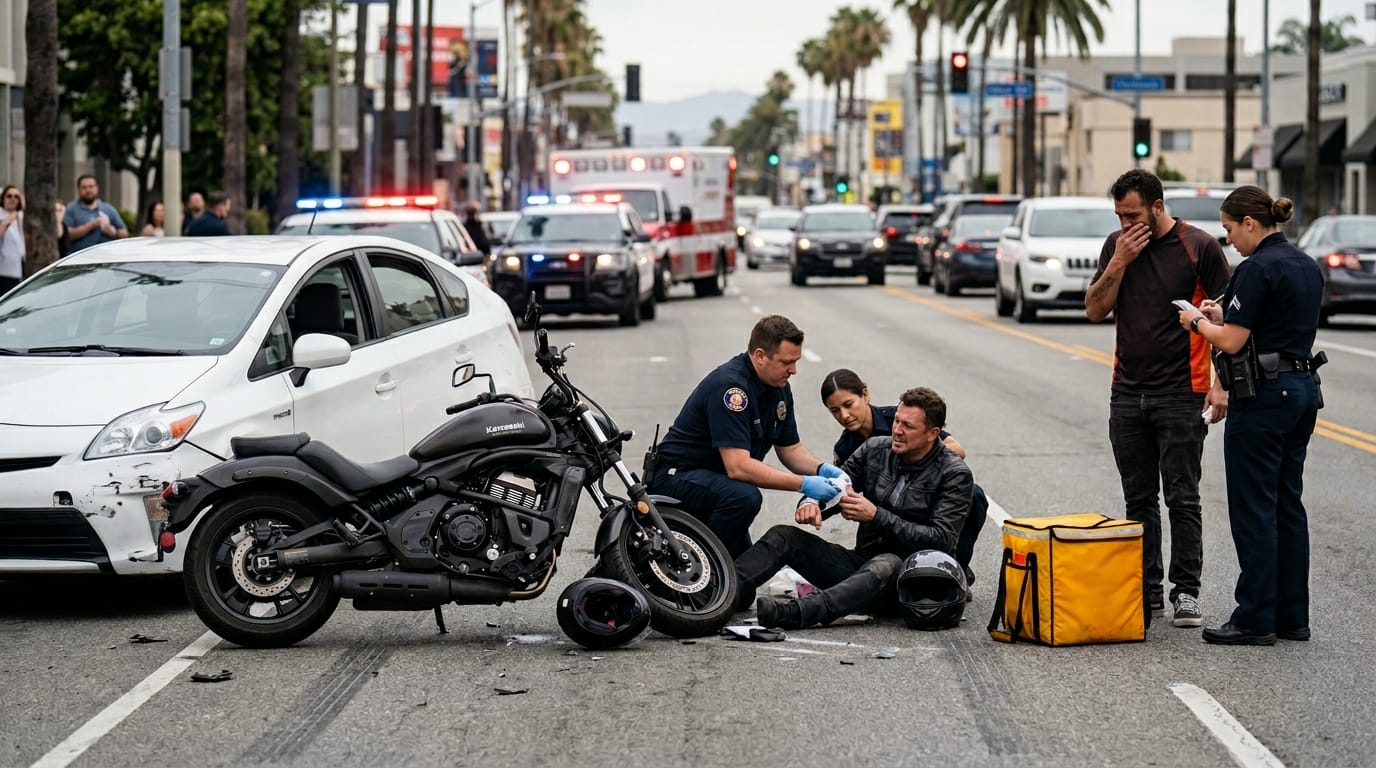
A delivery driver motorcycle accident claim can become more complicated than a normal motorcycle crash. At first, the case may look simple. A delivery driver hit a rider, opened a door into traffic, stopped suddenly, turned without warning, or pulled away from the curb. However, the real questions often go deeper.
Was the delivery driver using an app? Was the driver rushing to complete an order? Did the driver stop in a bike lane or block traffic? Was the driver logged into a delivery platform at the time of the crash? Did a phone notification, route update, or customer message distract the driver seconds before impact?
These questions matter in 2026 because delivery services are part of daily traffic. Food delivery, grocery delivery, package delivery, pharmacy delivery, and same-day retail delivery all place more drivers on California roads. Motorcyclists face extra risk because they are smaller, more exposed, and easier for distracted drivers to overlook.
This article is for educational purposes only. It is not legal advice. Still, it can help injured riders understand how a delivery driver motorcycle accident claim may be investigated, what evidence may matter, and why fast documentation can protect the case.
Why Delivery Driver Motorcycle Crashes Are Different
Delivery driver crashes are different because the driver may not be acting only as a private motorist. The driver may be working through an app, delivering food, transporting packages, or following business instructions. Because of that, the crash may involve personal insurance, commercial insurance, app-based coverage, or a dispute over whether the driver was actively working.
Distraction also plays a major role. Delivery drivers often use phones for navigation, order acceptance, customer messages, pickup instructions, delivery photos, and route changes. NHTSA reports that distracted driving remains a serious danger, with 3,208 people killed in distraction-involved crashes in 2024. Riders should take that risk seriously after any crash involving a delivery vehicle.
You can review the outside authority here: NHTSA distracted driving information.
California’s phone rules can also matter. The California Office of Traffic Safety explains that drivers cannot hold a cell phone or similar electronic device while driving. Hands-free use is different, but even mounted phones and apps can still create attention problems if the driver focuses on the screen instead of the road.
App distraction can become central evidence
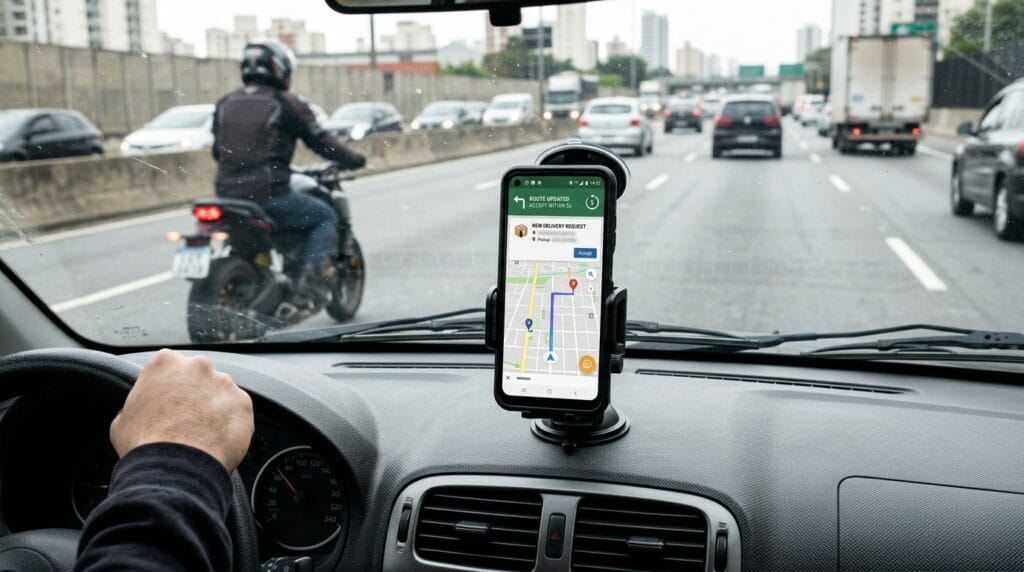
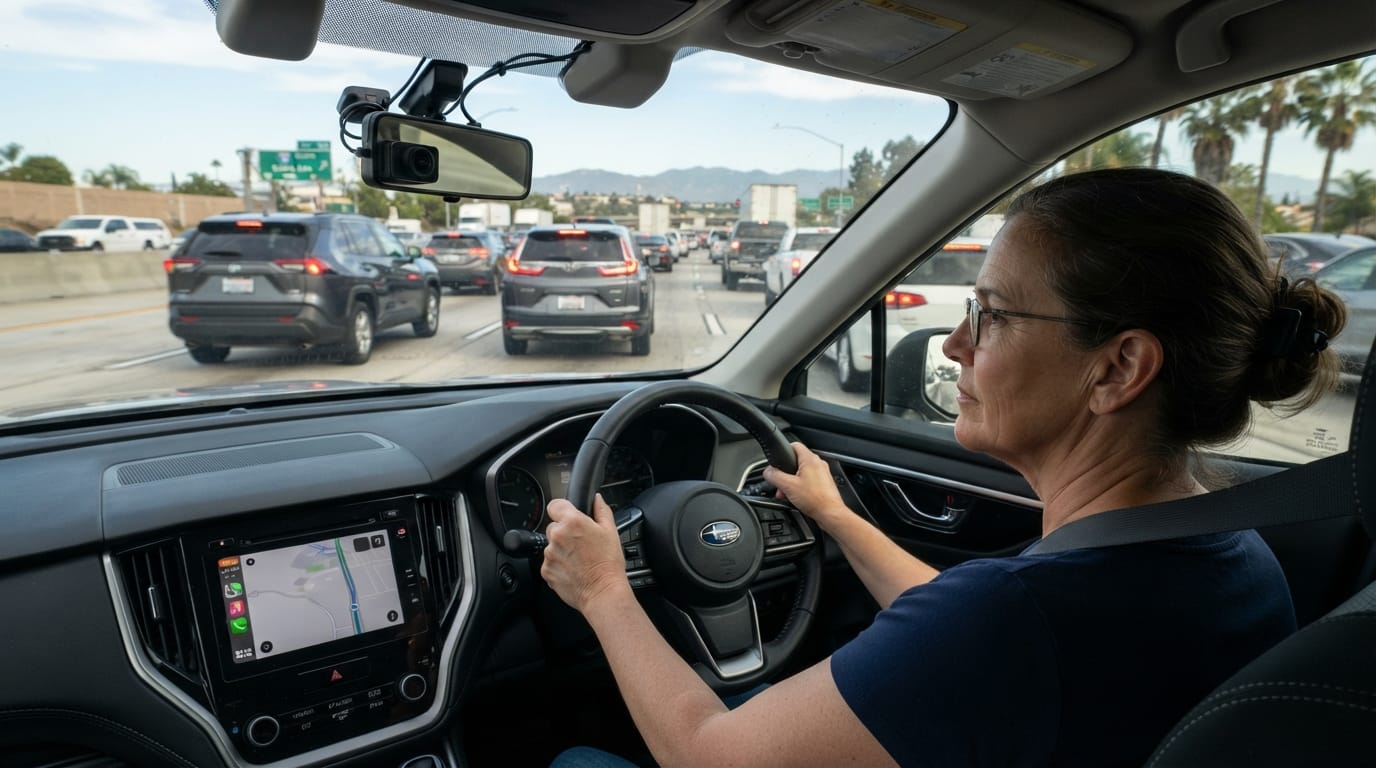
App distraction may become one of the most important issues in a delivery driver motorcycle accident claim. A driver may say they never saw the motorcycle. However, app records, phone activity, delivery logs, route data, or dashcam footage may show the driver was looking at a screen.
Even a short glance can matter. A delivery driver who checks an order, taps a map, reads a drop-off note, or responds to a customer can miss a rider nearby. At city speeds, a few seconds of distraction can cause a lane drift, unsafe turn, rear-end crash, or sudden stop.
Motorcyclists already deal with visibility problems. Delivery app distraction makes that problem worse. For related reading, see California motorcycle blind spot accident claims. That guide explains why “I never saw the rider” should not end the investigation.
Phone records, delivery logs, and route data may matter
Several types of digital evidence may help prove what happened. Phone records may show calls, texts, or data activity near the crash time. App logs may show whether the driver was logged in, accepting an order, navigating to a pickup, or completing a delivery. Route data may show whether the driver was rushing, circling, or stopping in an unsafe location.
Nearby cameras may also help. Restaurants, stores, apartment buildings, gas stations, doorbell cameras, dashcams, and helmet cameras may capture the driver’s movement before impact. However, this evidence can disappear quickly. Businesses may overwrite video within days, and app data may become harder to obtain over time.
Unsafe curb stops can put riders in danger
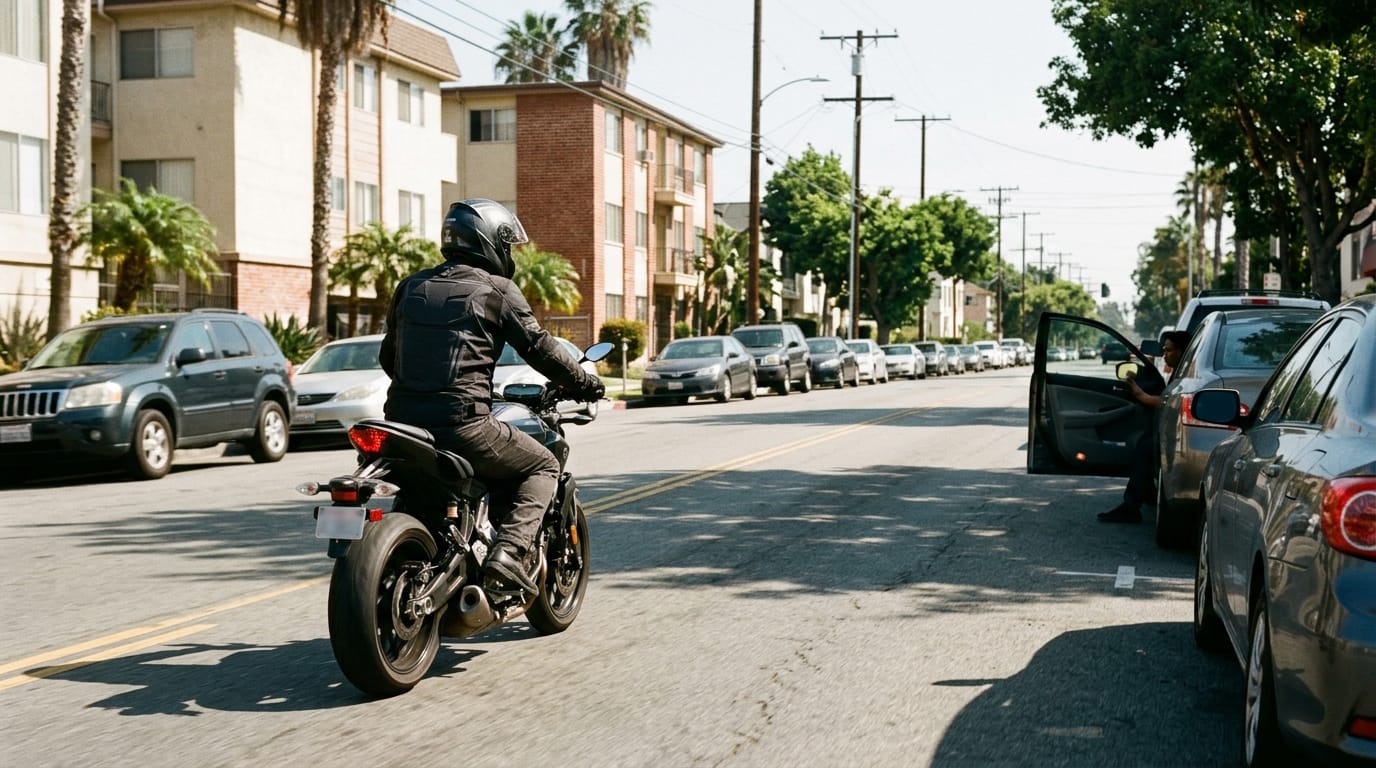
Delivery drivers often stop near curbs, apartment entrances, restaurants, and shopping centers. Sometimes they double park. Sometimes they block a bike lane. Sometimes they stop suddenly when a customer or pickup location appears. These choices can create serious danger for riders.
A motorcycle may have little time to react when a car stops without warning. A rider may also be forced around a blocked lane and into traffic. In other cases, a driver may open a door into the rider’s path or pull out from the curb without checking mirrors.
These cases may overlap with lane positioning and filtering disputes. If the insurer argues the rider was moving improperly between vehicles, review motorcycle lane filtering accident claims in 2026. The facts matter, and insurers should not use lane movement as an automatic excuse to blame the rider.
Insurance coverage can become disputed
Insurance is often one of the hardest parts of a delivery driver motorcycle accident claim. The driver may have personal auto insurance. However, that insurer may deny coverage if the driver was using the vehicle for paid delivery work. The delivery platform may also argue that its coverage does not apply.
This creates finger-pointing. The personal insurer may blame the platform. The platform may blame the driver. The driver may claim they were not actively working. Meanwhile, the injured rider may face medical bills, motorcycle damage, lost income, pain, and recovery time.
The driver’s exact status matters. Were they logged into the app? Had they accepted an order? Were they driving to a pickup? Were they carrying food or packages? Had the delivery already ended? These details can affect which insurance policy may apply.
Modern vehicles can add another layer. Some delivery vehicles have driver-assistance features, cameras, or connected systems. If technology failed to warn the driver or the driver relied too heavily on it, see blind-spot detection and motorcycle crashes in 2026.
Gig work status can change the claim strategy
A delivery driver may be an employee, contractor, platform worker, restaurant worker, courier, or package driver. Each setup can change the investigation. A company-owned van may involve different records than a personal car used for food delivery. A restaurant employee may create different liability questions than an independent app driver.
Because of that, the injured rider should document company names, app logos, delivery bags, package labels, vehicle markings, and driver statements. A small detail at the scene may later help identify insurance coverage or business responsibility.
How Injured Riders Can Protect the Claim
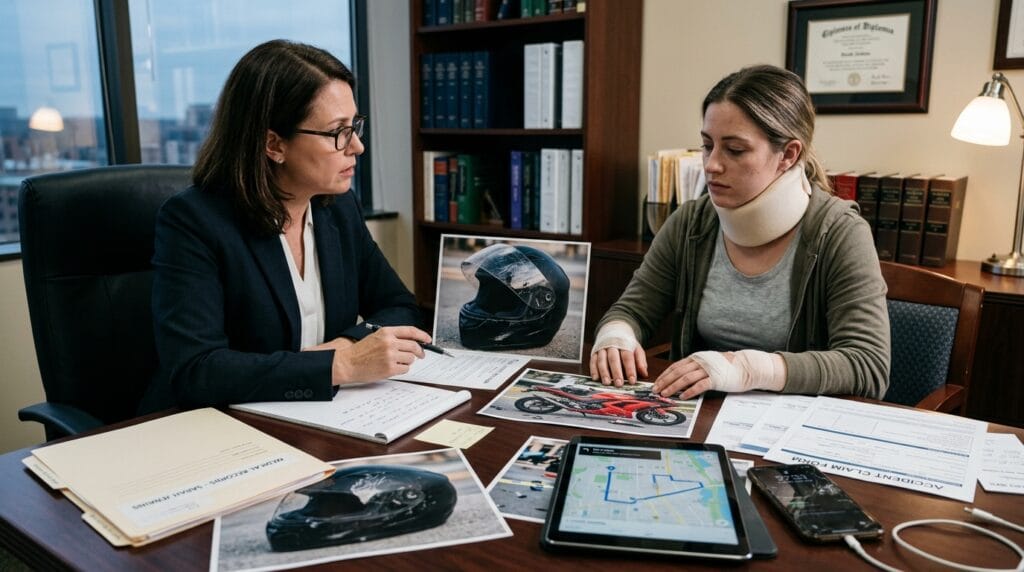
After a delivery driver motorcycle crash, medical care comes first. Riders should get checked even if they feel able to stand or talk after impact. Adrenaline can hide injuries. Neck pain, back pain, headache, dizziness, numbness, shoulder pain, knee pain, chest pain, and road rash should be documented early.
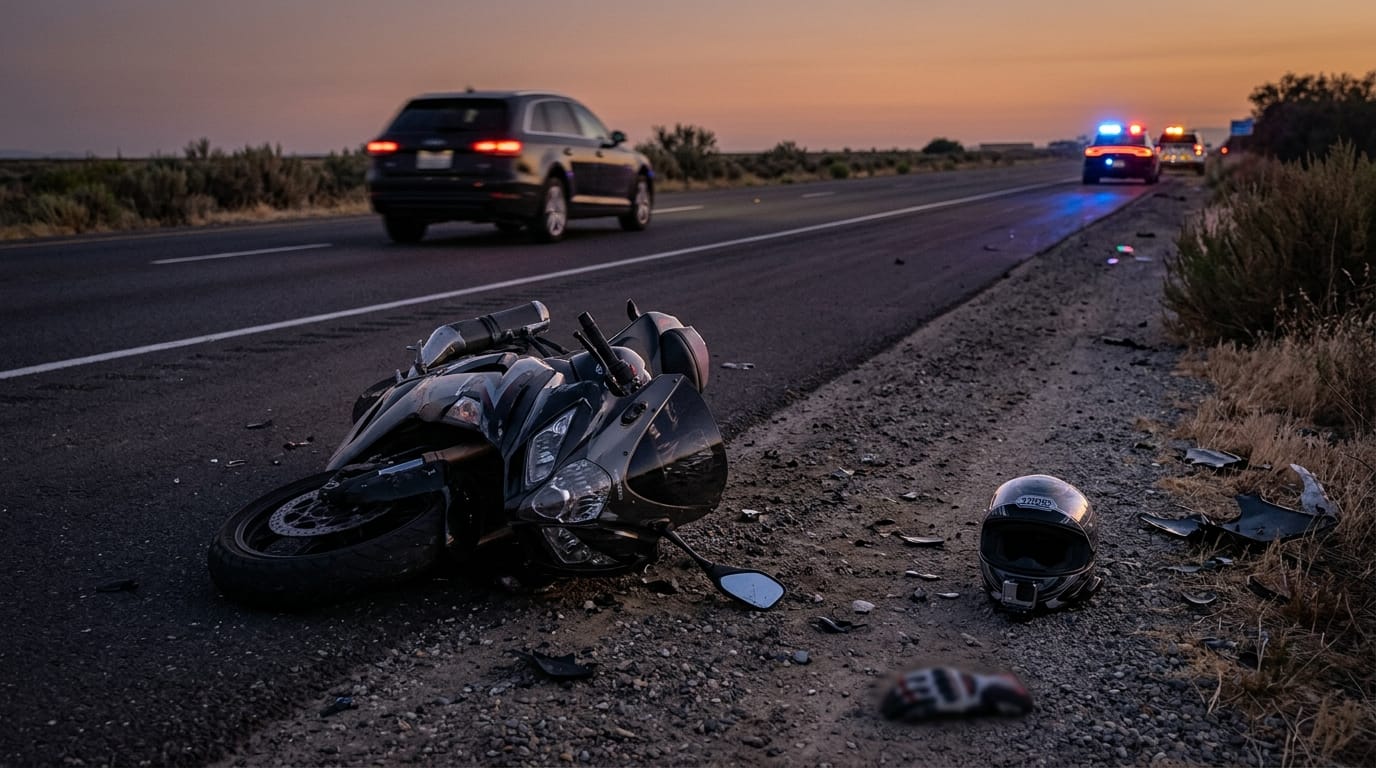
Next, preserve evidence. Photograph the motorcycle, other vehicle, license plates, delivery bags, app screens if visible, road markings, traffic signs, skid marks, debris, vehicle positions, and visible injuries. Also photograph the helmet, jacket, gloves, boots, and any damaged riding gear.
For a full evidence checklist, read how to document your motorcycle accident for a strong legal case. Strong early proof can stop an insurer from rewriting the crash later.
Do not rely only on the delivery driver’s explanation. A driver may say they were “just following GPS” or “only stopping for a second.” Those statements may still show distraction, unsafe stopping, or poor route decisions. Write down what the driver says, but do not argue at the scene.
Medical records and crash evidence should work together
A strong claim needs both fault evidence and medical evidence. Fault evidence explains why the crash happened. Medical evidence explains what the crash caused. If one side is weak, the insurer may use that weakness to reduce the claim.
Medical records should connect symptoms to the crash. They should also show diagnosis, imaging, treatment plans, prescriptions, physical therapy, work restrictions, pain levels, and future care needs. If the rider delays treatment, the insurer may argue the injury was minor or unrelated.
For more detail, read motorcycle injury documentation and why medical records matter. Motorcycle cases often need strong medical proof because insurers may already be looking for ways to blame the rider.
Electric motorcycles and eMotos may create additional issues. If the crash involved an electric two-wheeler, app-based bike, or disputed vehicle classification, see eMoto and electric motorcycle accidents in California in 2026.
Do not give broad statements before the evidence is clear
Insurance adjusters may ask for a recorded statement soon after the crash. Be careful. The rider may not yet know the full injury diagnosis. The rider may also lack phone records, app data, video, witness statements, and delivery status information.
Avoid guessing. Do not say the rider “came out of nowhere.” Do not accept blame just because the delivery driver says they did not see the motorcycle. Also, do not minimize injuries while symptoms are still developing.
In the end, a delivery driver motorcycle accident claim is about modern evidence. The crash may involve app activity, phone use, unsafe stopping, route pressure, insurance disputes, and business records. The sooner that evidence is preserved, the stronger the claim can become.
Motorcyclists already face unfair blame after crashes. Delivery driver cases can make that problem worse because companies and insurers may point fingers at each other. Riders should protect themselves by getting medical care, documenting the scene, saving digital evidence, and keeping every record connected to the crash. In 2026, the strongest motorcycle claims are built with fast action and clear proof.