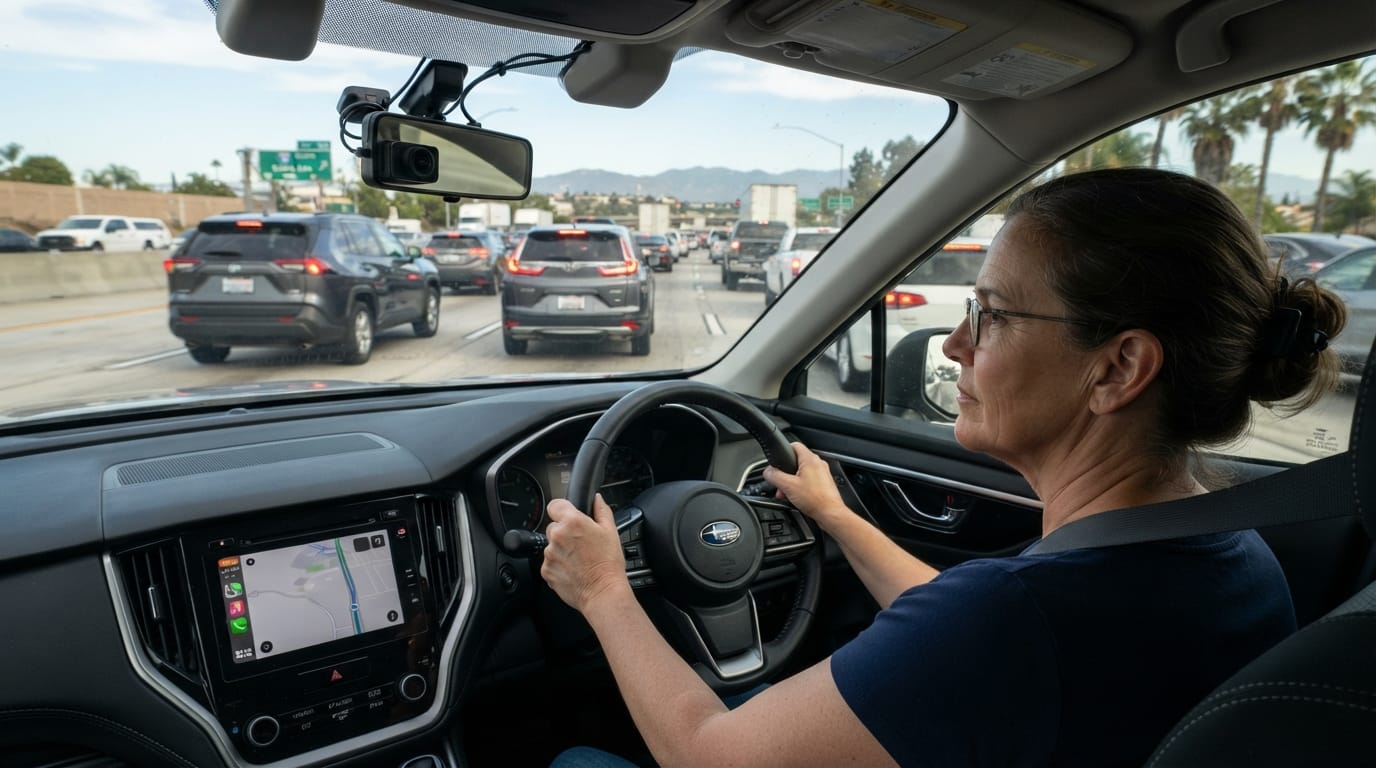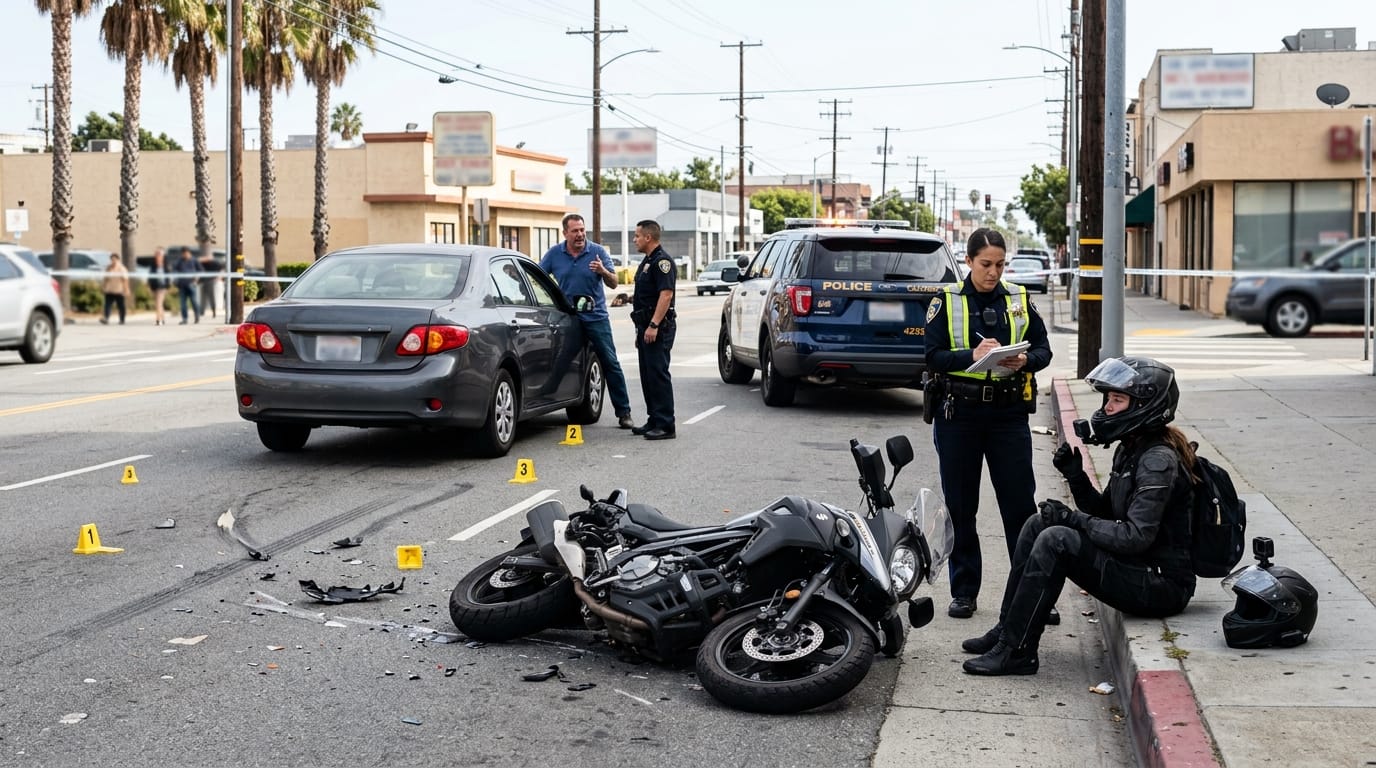
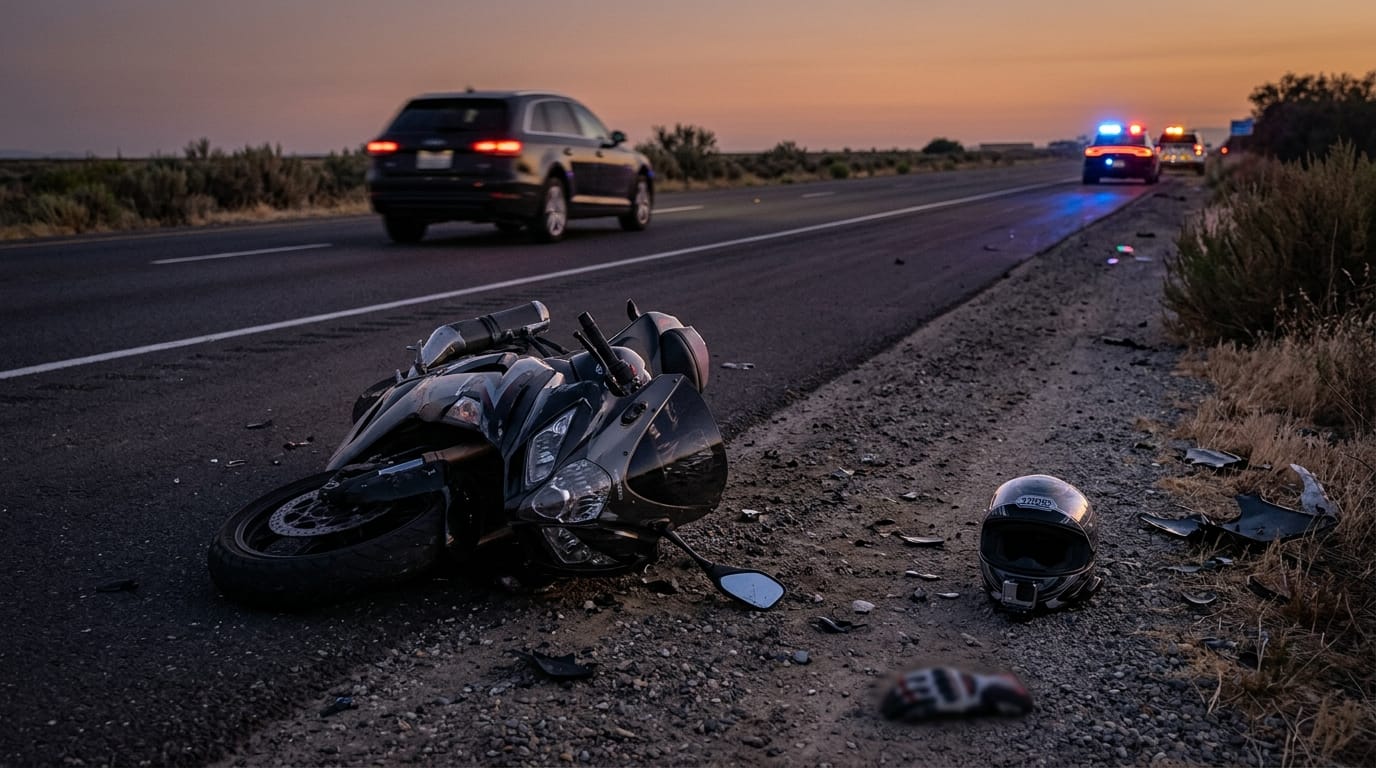
A motorcycle ghost plate claim can become difficult fast. A “ghost plate” usually means a license plate looks hidden, altered, tinted, covered, flipped, unreadable, fake, tucked, or designed to avoid camera detection. When that vehicle hits a rider and leaves the scene, the injured motorcyclist may lose the detail that often identifies the driver: the plate number.
This issue matters in 2026 because California has increased attention on products and devices that interfere with license plate reading. For injured riders, this is not only a traffic enforcement issue. A readable plate can help police, insurers, toll systems, dashcams, and witnesses connect a crash to the correct vehicle.
Motorcyclists face a unique risk in these cases. Many crashes happen quickly. A car may clip a rider during a lane change, force the motorcycle toward the shoulder, turn across the rider’s path, or flee after a rear impact. If the plate is unreadable, the rider may need to rely on helmet-cam video, witness statements, vehicle debris, paint transfer, camera footage, and uninsured motorist coverage.
This article is for educational purposes only and is not legal advice. Every motorcycle accident claim depends on the facts, injuries, insurance coverage, evidence, and legal deadlines.
Why Ghost Plates Create Serious Problems for Injured Riders
Most crash claims start with basic identifying details. Riders need the driver’s name, insurance, vehicle description, license plate, registration, and police report number. A ghost plate creates a major gap in that process. The rider may know another vehicle caused the crash, but the claim still needs proof that points to the correct driver or policy.
This problem becomes worse after a hit-and-run. A witness may remember only a dark plate cover, a bent plate, a temporary tag, or a vehicle with no readable rear plate. A camera may capture the crash but fail to read the plate. That gives the insurance company room to question the claim.
California’s DMV says AB 1085 makes it a $1,000 infraction to manufacture in California a product or device that obscures, or intends to obscure or interfere with, visual or electronic license plate reading. Riders can review the official update here: California DMV 2026 new laws update.
Motorcycle crashes often leave less time to identify the vehicle
A rider may have only seconds to react after a dangerous driver moves into the lane, brakes suddenly, or turns across traffic. Unlike a car driver, a motorcyclist may focus on staying upright instead of reading a plate. After impact, pain, shock, road rash, head trauma, or traffic danger can make it even harder to remember details.
That is why ghost plate crashes need fast evidence collection. A partial plate, vehicle color, body style, bumper damage, missing mirror, wheel design, decal, roof rack, or direction of travel can still matter. Small details may help police or insurers narrow the search.
This topic connects with California Motorcycle Blind Spot Accident Claims in 2026. Many ghost plate crashes start with the same problem: a driver says they never saw the rider, then leaves the injured motorcyclist to prove what happened.
Helmet-cam footage can capture what the rider could not remember
Helmet cameras, handlebar cameras, rear-facing cameras, and nearby dashcams can capture details the rider misses during the crash. The footage may show the vehicle before impact, unsafe lane movement, brake lights, direction of travel, or part of the plate.
Save the raw video immediately. Do not edit it first. Do not post only a short clip and delete the full file. The full timeline may show traffic speed, lane position, weather, lighting, and the driver’s behavior before the crash.
Physical evidence can identify the vehicle type
When the plate is unreadable, physical evidence becomes more important. Broken plastic, mirror pieces, light fragments, paint transfer, tire marks, and impact damage can help identify the type of vehicle involved. Take photos before anyone repairs, cleans, moves, sells, or sends the motorcycle to salvage.
Also photograph the rider’s helmet, jacket, gloves, boots, and damaged gear. These items can show impact direction, slide distance, and injury force. They can also support the medical portion of the claim.
Insurance companies may challenge contact and fault
Ghost plate cases often become insurance disputes. If the driver leaves and no one identifies the vehicle, the insurer may question whether contact happened at all. It may argue that the rider lost control, rode too fast, lane split unsafely, or reacted to a threat that was not real.
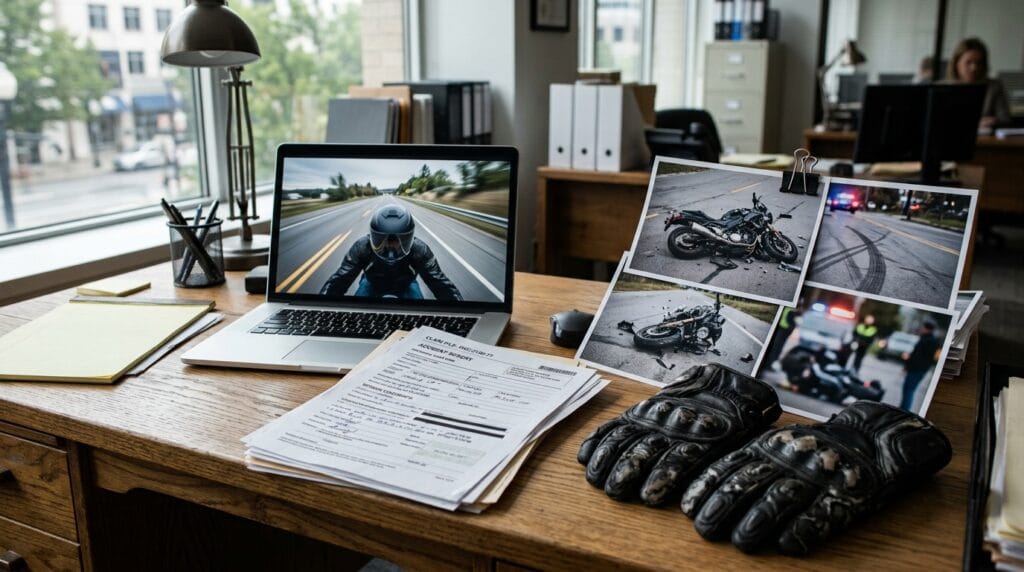
That is why riders need more than a memory of the crash. They need photos, video, witnesses, police notes, medical records, and insurance documents. The stronger the proof, the harder it becomes for an insurer to blame the rider without evidence.
Your article on AI Dashcams and Motorcycle Accident Evidence fits naturally here. Video and smart-device data can help show the impact sequence, driver movement, road conditions, and whether the rider had time to avoid the crash.
Do not guess during early insurance calls
Insurance adjusters may ask fast questions before the rider has the police report, medical results, camera footage, or witness details. Do not guess about speed, distance, plate characters, or fault. If you do not know, say you do not know.
Guessing can create problems later. A rider with a concussion or shock may not remember every detail. It is better to give short, factual answers until the evidence becomes clearer.
How UM Coverage and Fast Evidence Collection Can Protect the Claim
If the ghost plate driver never gets identified, uninsured motorist coverage may become one of the most important parts of the claim. Many riders think UM coverage only applies when the at-fault driver has no insurance. Depending on the policy and facts, it may also matter when a hit-and-run driver cannot be found.
Underinsured motorist coverage may matter if police later find the driver but the driver lacks enough insurance to cover the injuries. That issue can become serious after a motorcycle crash because rider injuries often involve emergency care, fractures, surgery, brain trauma, spinal injuries, long therapy, and lost income.
Riders should review their own motorcycle policy quickly. Reporting rules, policy language, deadlines, medical proof, and crash evidence all matter. A missed notice requirement can create avoidable problems.
Evidence checklist after a motorcycle ghost plate crash
A strong motorcycle ghost plate claim needs three types of proof: crash evidence, identification evidence, and injury evidence. Crash evidence shows how the collision happened. Identification evidence helps connect the crash to a vehicle or driver. Injury evidence shows how the crash affected the rider’s body, work, and daily life.
Start with the crash scene. Take photos of lane position, scrape marks, debris, tire marks, traffic signs, lighting, cameras, guardrails, intersections, shoulders, and vehicle damage. Get witness names and contact information. Ask witnesses what they saw, but do not pressure them to guess.
Then protect the digital evidence. Save helmet-cam footage, dashcam files, GPS logs, phone photos, smart-device data, and messages from witnesses. If nearby businesses, homes, toll roads, gas stations, or traffic cameras may have footage, act quickly. Many systems overwrite clips within days.
For insurance background, read Navigating Uninsured Motorist Claims After a Motorcycle Accident. That guide supports this topic because UM coverage may become critical when a fleeing driver cannot be identified.
Medical documentation still drives claim value
Even when the hit-and-run evidence is strong, medical records still matter. Get checked quickly. Follow treatment instructions. Keep emergency records, imaging results, prescriptions, therapy notes, specialist reports, work restrictions, and bills.
Your article on Motorcycle Injury Documentation is a useful internal link here. It explains why organized medical proof can protect the value of a rider’s claim.
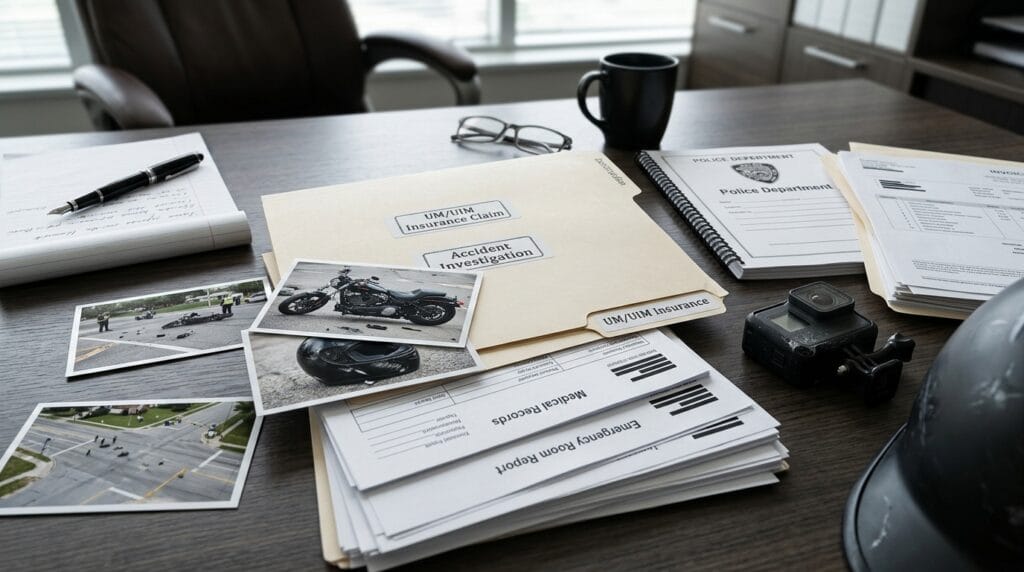
A motorcycle ghost plate claim is really a race to preserve proof. The other driver may have hidden the plate, fled the scene, or tried to avoid detection. That does not mean the injured rider has no options. Helmet-cam footage, dashcam video, physical evidence, witness statements, police reports, medical records, and UM coverage can still help build the claim.
If a vehicle with an obscured, fake, missing, folded, or unreadable plate caused your motorcycle crash, act quickly. Get medical care. Report the crash. Save the raw footage. Photograph the motorcycle and gear. Look for witnesses and cameras. Then review the insurance issues before giving broad statements or accepting a quick settlement.