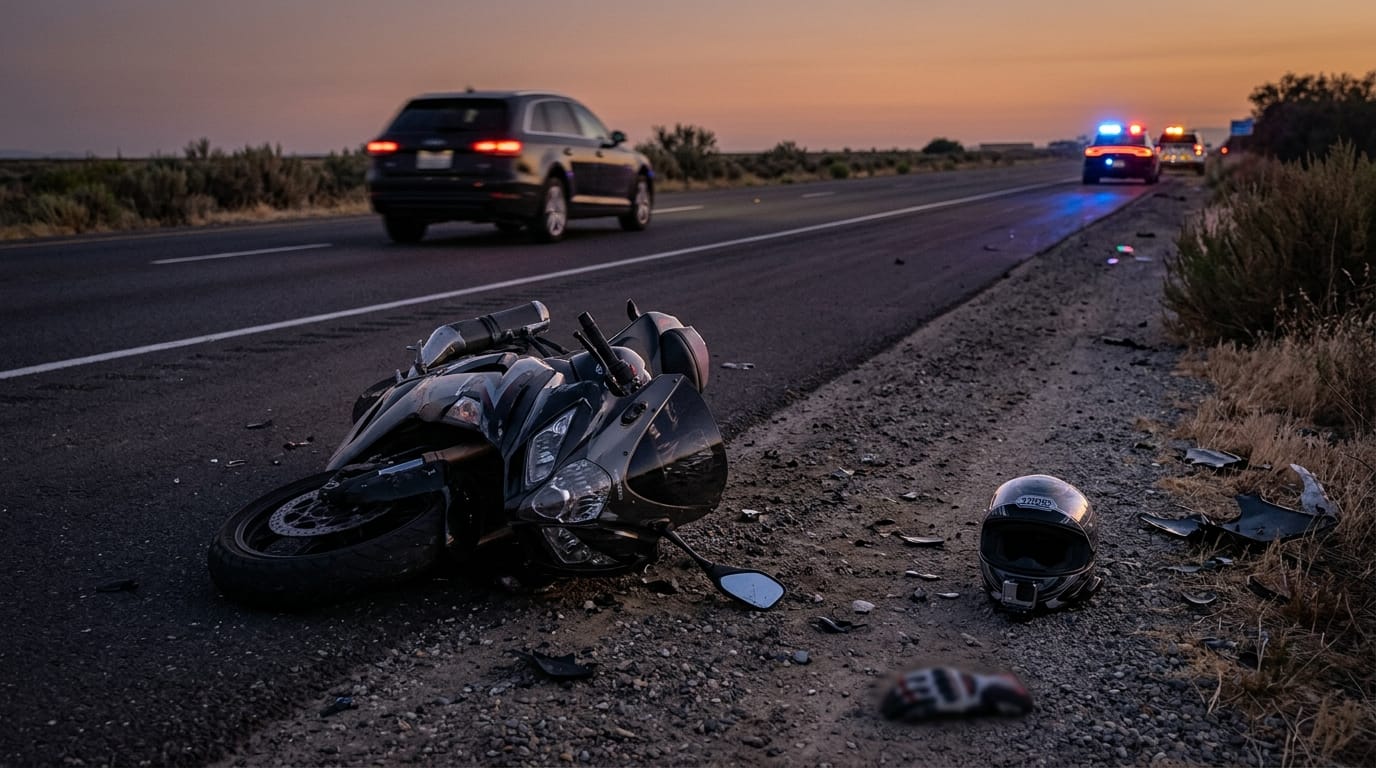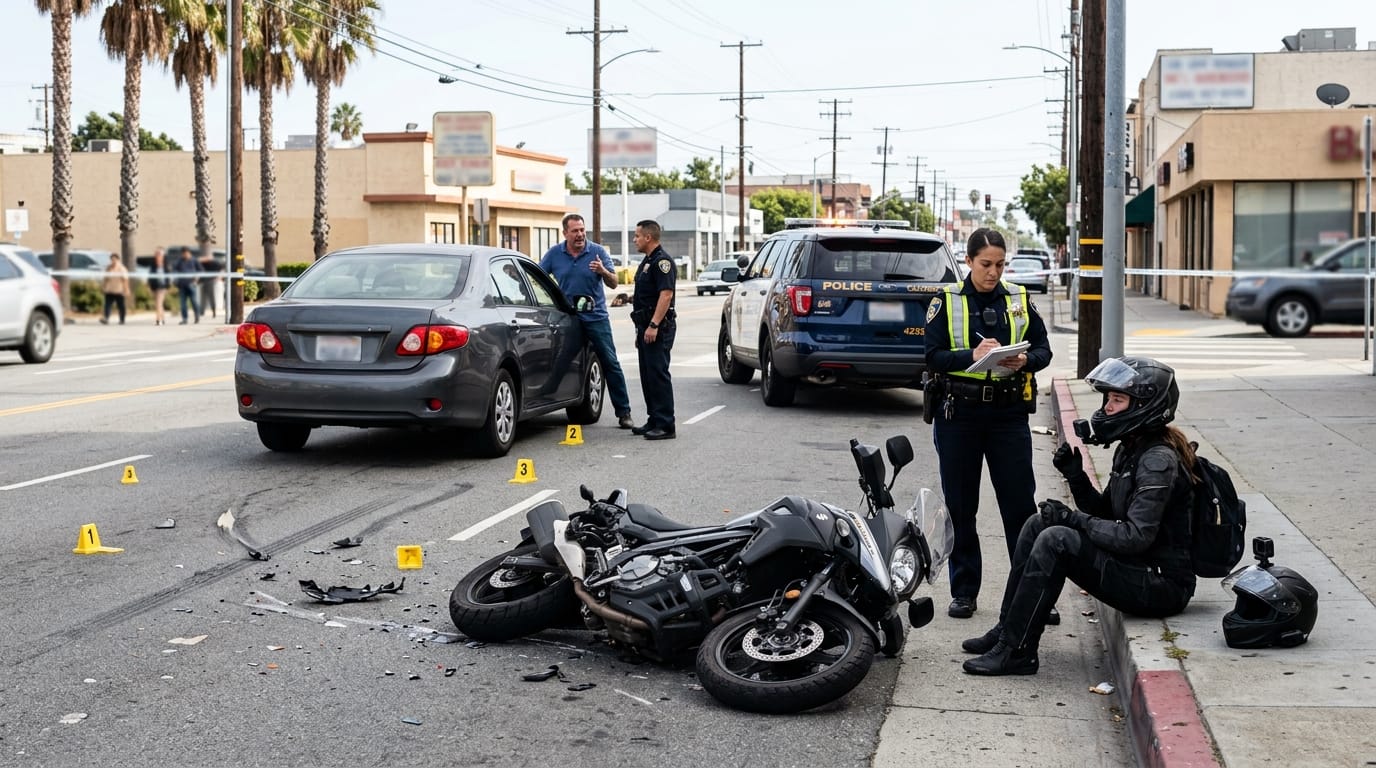
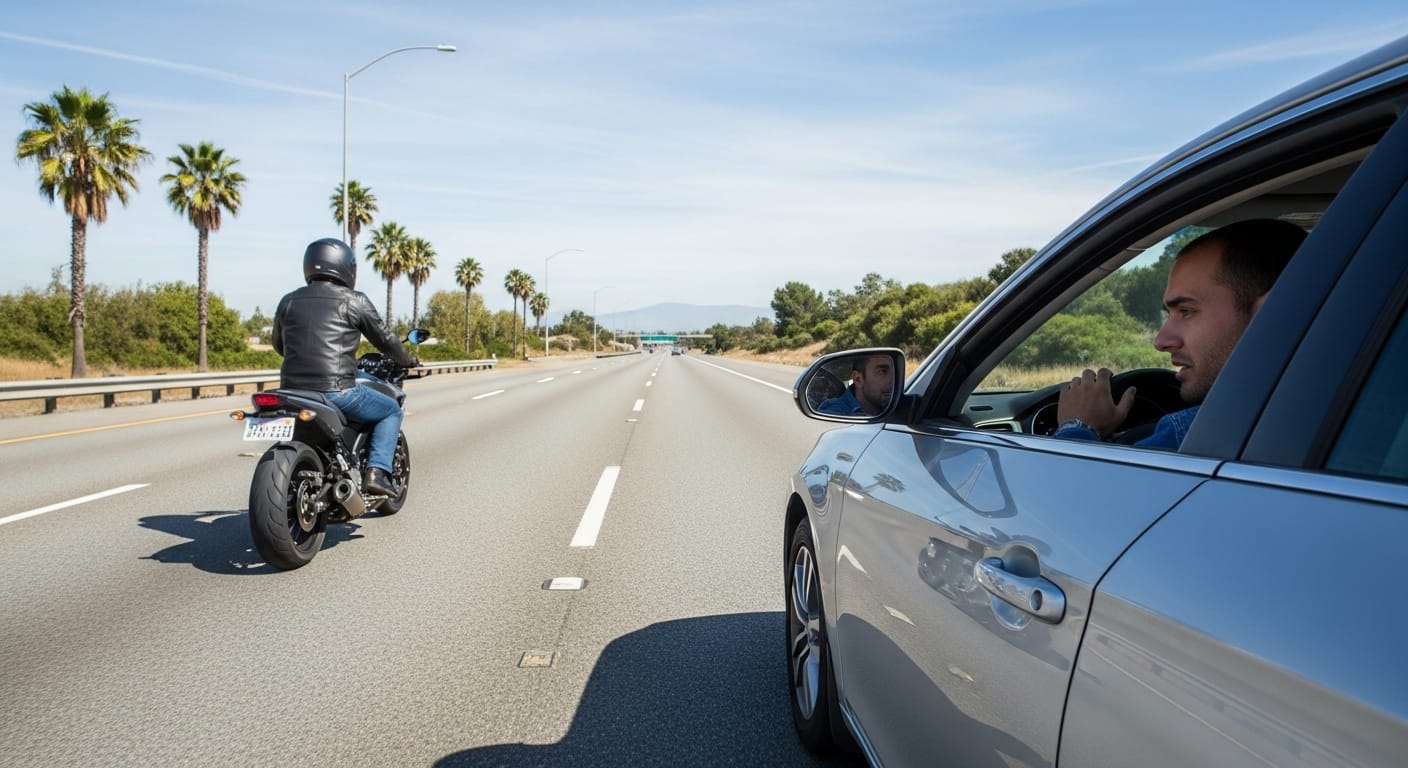
A California motorcycle blind spot accident often starts with one common excuse: “I never saw the motorcycle.” Drivers use that phrase after unsafe lane changes, sudden merges, freeway sideswipes, and intersection crashes. Insurance companies may repeat it later to make the crash sound unavoidable. That does not mean the rider caused the collision.
Motorcycles are smaller than cars, but they are not invisible. Drivers must check mirrors, scan blind spots, signal before moving, and make sure a lane is clear. When a driver skips those steps, a rider can suffer serious injuries in seconds.
This issue is especially timely in 2026. May is Motorcycle Safety Awareness Month, and national safety data continues to show that riders face serious risk on U.S. roads. A California motorcycle blind spot accident claim should focus on what the driver did before impact, not only what the driver claims after the crash.
Why Blind Spot Motorcycle Accidents Matter in 2026
Blind spot crashes are dangerous because riders have little protection. A side swipe that only dents a car can throw a motorcyclist onto the road. The rider may hit another vehicle, slide across pavement, or suffer injuries from direct impact.
These crashes can happen on freeways, city streets, rural highways, and busy commercial roads. They often involve drivers who change lanes too quickly, merge without checking, drift while distracted, or turn across a rider’s path.
Driver Inattention Often Creates the Danger
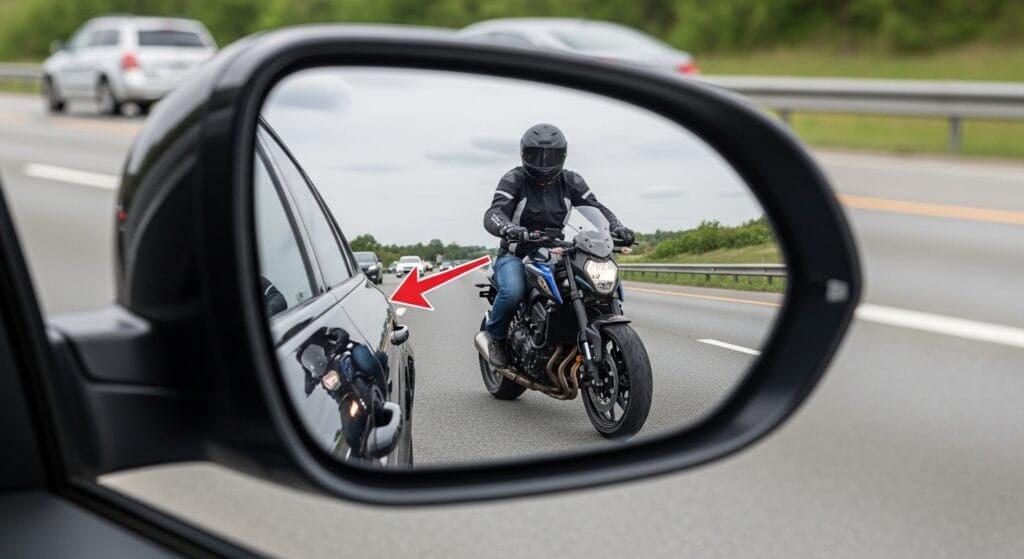
Many blind spot crashes involve inattention. A driver may glance at a phone, adjust navigation, talk to passengers, or rush through traffic. That short distraction can make the driver miss a motorcycle beside them.
In a California motorcycle blind spot accident, the key question is not only whether the rider was visible. The better question is whether the driver made a careful visual check before moving. A driver should not rely on one quick mirror glance. A careful driver checks mirrors, turns their head, signals, and waits until the lane is safe.
Insurance companies may argue that the motorcycle was hard to see. That argument should not end the case. Road position, lighting, traffic speed, mirrors, signal use, dashcam footage, and witness statements may all show that the driver failed to use reasonable care.
Unsafe Lane Changes Can Cause Severe Injuries
Unsafe lane changes are one of the clearest blind spot crash patterns. A car moves left or right and strikes the motorcycle beside it. The impact may knock the rider down or force the rider into another lane.
These cases often involve disputed stories. The driver may say the rider was speeding. The rider may say the driver moved suddenly. Video, damage patterns, scrape marks, vehicle positions, and witnesses can help explain what happened.
Serious injuries may include broken bones, road rash, shoulder damage, knee injuries, spinal trauma, head injuries, and internal injuries. Medical records should clearly connect those injuries to the crash.
Intersections Can Also Create Blind Spot Disputes
Blind spot cases do not only happen during freeway lane changes. Intersections can create the same problem. A driver may turn right without checking for a motorcycle. Another driver may make a left turn and misjudge the rider’s position. A vehicle may block the driver’s view until the last moment.
In these claims, timing matters. Investigators may review traffic lights, turn signals, stop signs, lane markings, and the location of each vehicle before impact. They may also check whether the driver looked in the correct direction before turning.
“I Did Not See Them” Is Not a Complete Defense
A driver does not avoid liability just by saying they did not see the rider. Drivers have a duty to look. If traffic conditions require extra caution, the driver must slow down and check more carefully.
That point matters because riders often face unfair blame. Some adjusters assume motorcycles are risky by default. Others suggest the rider must have been speeding or lane splitting, even when the evidence does not support that claim.
Your related article on lane-splitting motorcycle accidents in California can support this topic. Both articles deal with the same problem: drivers claim they never saw the motorcycle, then insurers try to shift blame.
How Riders Can Build a Strong Blind Spot Accident Claim
A strong motorcycle claim needs evidence. After a crash, the rider may be in pain, shocked, or unable to gather details. Family members, witnesses, or legal representatives may need to help preserve proof before it disappears.
Start with the basics. Save photos of the motorcycle, other vehicle, road, lane markings, debris, skid marks, traffic signs, and visible injuries. Get witness names and phone numbers. Ask whether anyone captured the crash on dashcam, helmet cam, business camera, or doorbell camera.
Evidence Can Show What Happened Before Impact
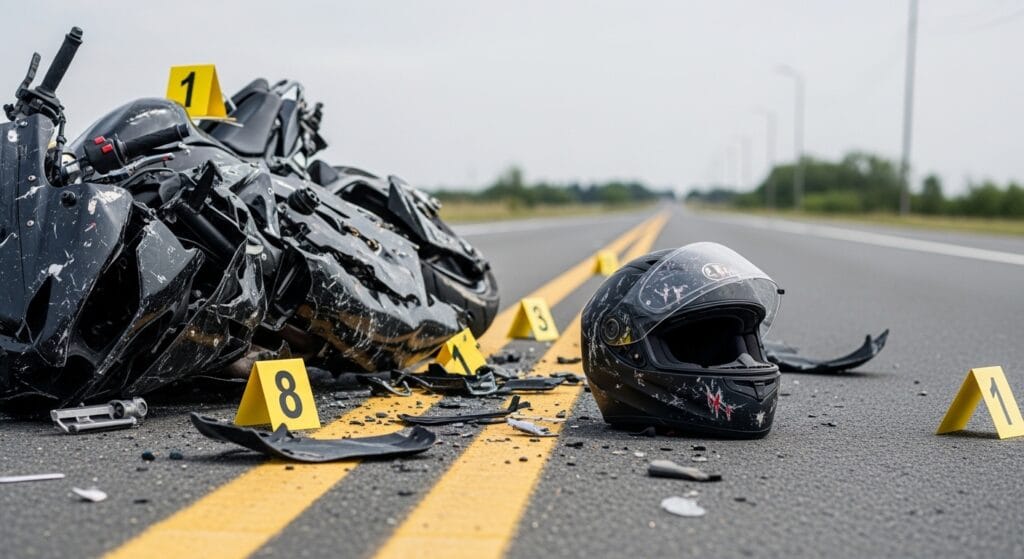
Blind spot cases depend on the moments before the collision. The impact point tells part of the story, but the movement before impact often matters more. Video can show whether the driver signaled, drifted, crossed a lane line, or moved suddenly.
Vehicle damage can also help. Scrapes along the side of a car may support a sideswipe claim. Damage to the motorcycle’s handlebar, fairing, foot peg, or side case may show how the vehicles touched. A police report may include diagrams, citations, and statements, but it may not include every detail.
Digital evidence can help too. Dashcams, helmet cameras, smart motorcycle systems, and nearby cameras may capture the crash. Your article on AI dashcams and motorcycle accident evidence is a strong internal link for this section.
Medical Records Help Prove the Value of the Claim
Fault evidence proves why the crash happened. Medical evidence proves how badly the rider was hurt. A rider should get medical care right away, even if pain seems manageable at first.
Neck pain, back pain, headaches, numbness, dizziness, shoulder pain, and knee pain can worsen after the adrenaline fades. Medical records can connect those symptoms to the crash. They can also show treatment needs, work restrictions, therapy, surgery, and future care.
Keep emergency records, imaging reports, prescriptions, therapy notes, mileage logs, repair estimates, helmet photos, and missed work records. These records can help show the full impact of the accident.
Comparative Fault Can Reduce Compensation
California uses comparative fault. That means an injured rider may still recover compensation even if the insurer assigns part of the blame to the rider. However, the rider’s compensation can drop by the assigned fault percentage.
This is why blind spot cases need careful handling. An insurer may argue that the rider was speeding, riding too close, changing lanes, or staying in the driver’s blind spot too long. Those claims should be tested against the evidence.
Your guide on comparative fault in motorcycle accidents can help readers understand this issue. Your article on motorcycle road hazard accidents in California can also support claims where a rider had to avoid debris or unsafe pavement before the blind spot collision.
A California motorcycle blind spot accident should not be treated as a simple misunderstanding. Drivers must share the road with riders. They must check blind spots before changing lanes or turning. When they fail to do that, serious injuries can follow.
For additional authority, readers can review NHTSA’s motorcycle safety guidance and the California Office of Traffic Safety motorcycle safety page. Both sources highlight the need for awareness, visibility, and safer driving around motorcycles.