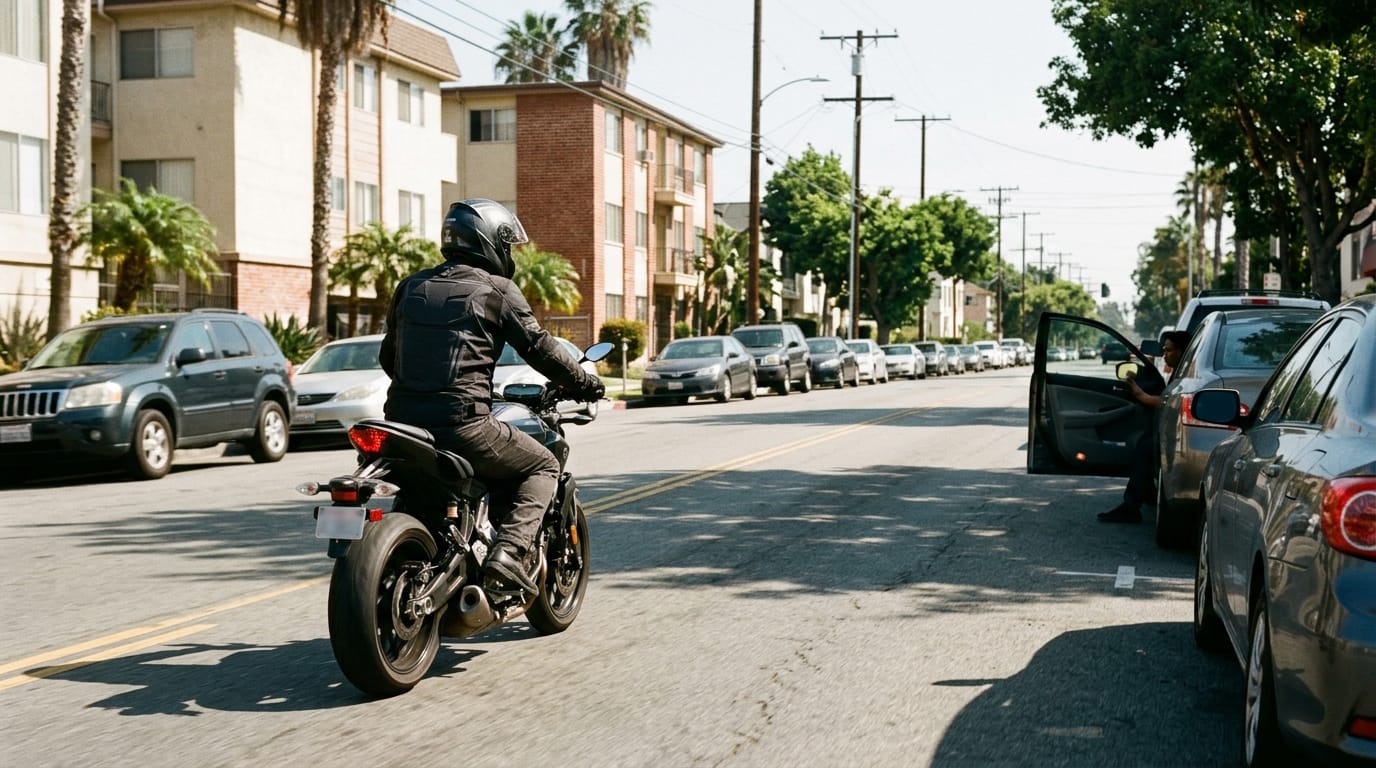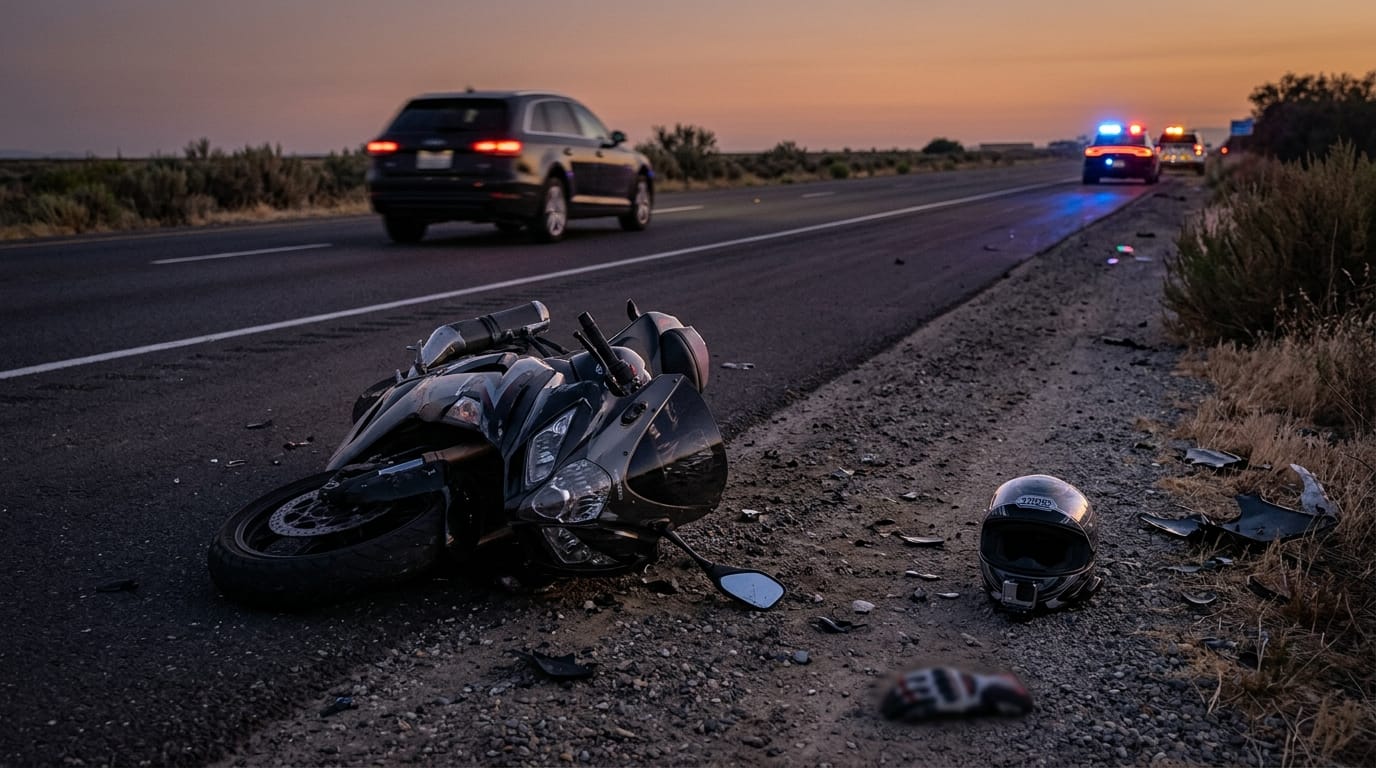
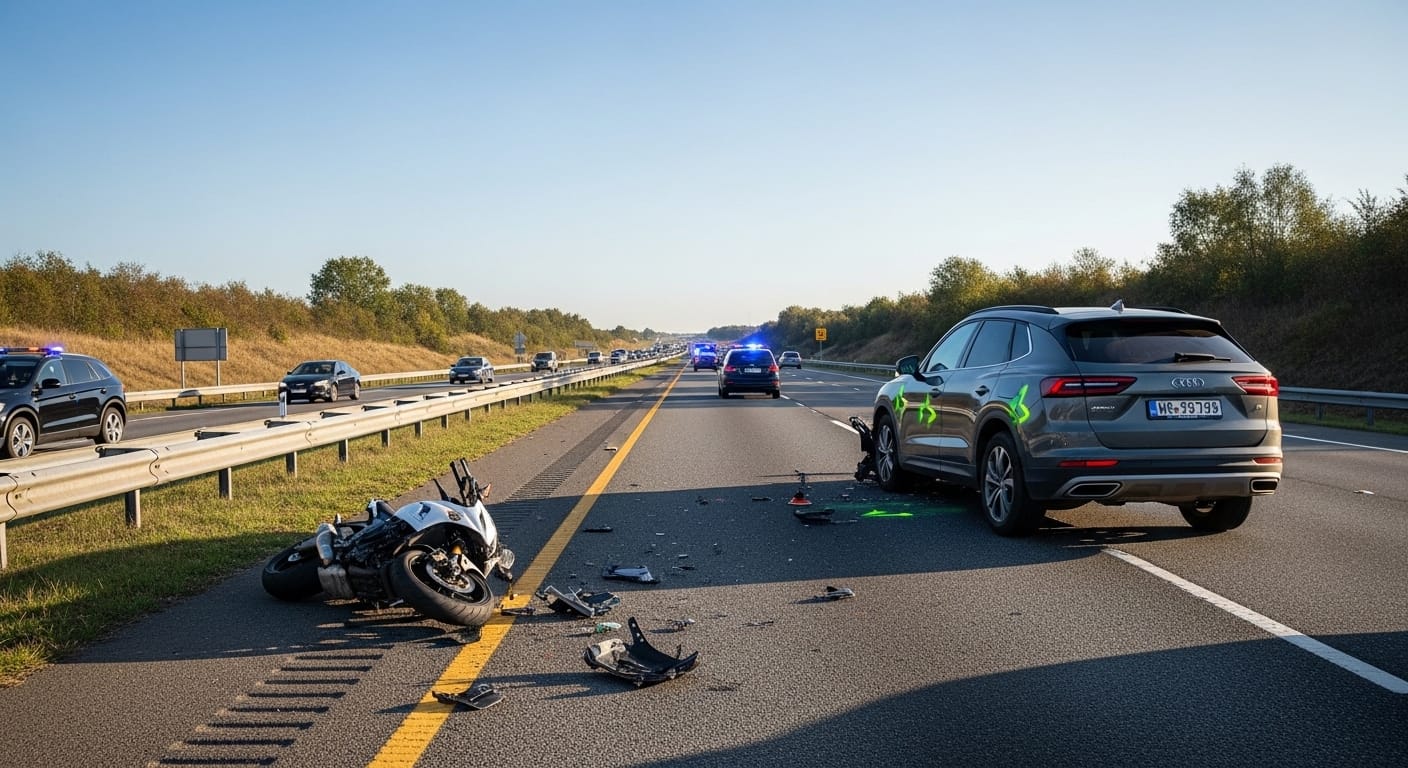
Blind-spot detection motorcycle crashes are becoming a bigger legal and safety topic in 2026 because many drivers now believe their vehicle’s technology will catch what they miss. That belief creates a dangerous gap between expectation and reality. Drivers assume the sensors will warn them. Riders assume the driver saw them or received an alert. Then a lane-change collision happens anyway, and the same excuse comes out after impact: “I never saw the motorcycle.”
That is exactly why blind-spot detection motorcycle crashes deserve their own discussion. These cases are not just ordinary lane-change collisions anymore. They often involve a driver, a warning system, a human reaction problem, and a serious dispute over who failed first. Was the driver negligent? Did the warning activate? Did the driver ignore it? Was the rider in a position that should have been noticed? Or did everyone place too much trust in technology that was only designed to assist, not replace careful driving?
For injured riders, this matters because insurance companies love technology-based defenses. They may suggest the system should have protected the driver, so the rider must have appeared suddenly. They may argue the motorcycle was moving too fast, riding in a hard-to-detect position, or was simply outside the range of the system. In practice, that means the crash claim can turn into a battle over visibility, timing, human attention, and electronic evidence instead of a straightforward negligence case.
This topic also fits naturally with the rest of your blog. Readers who want broader context can also review Lane-Splitting Motorcycle Accidents in California 2026, AI Dashcams and Motorcycle Accident Evidence, and Motorcycle Hit-and-Run Accidents in California. If the crash happened during a last-second lane drift, unsafe merge, or left turn, these related posts help build a stronger internal cluster around visibility and proof.
Why Blind-Spot Detection Motorcycle Crashes Matter More in 2026
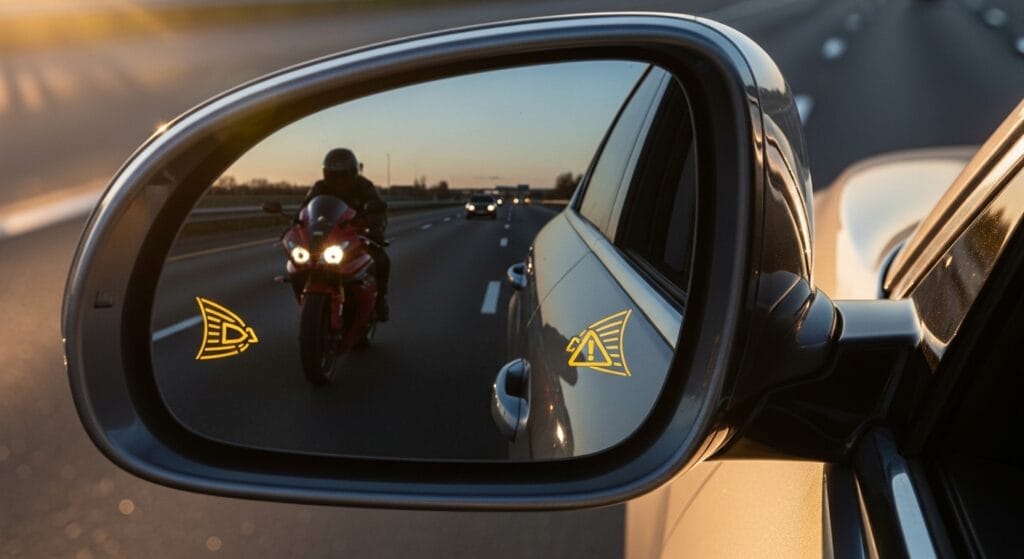
Blind-spot detection motorcycle crashes matter more now because driver-assistance systems are becoming more common, but human behavior has not magically improved with them. Some drivers treat blind-spot monitoring like a shield. They stop checking carefully, rely too heavily on warning lights, or assume the car will correct a bad move before anything serious happens. That overconfidence can be deadly for riders, who remain smaller, harder to see, and far more exposed in any impact.
What blind-spot systems are supposed to do
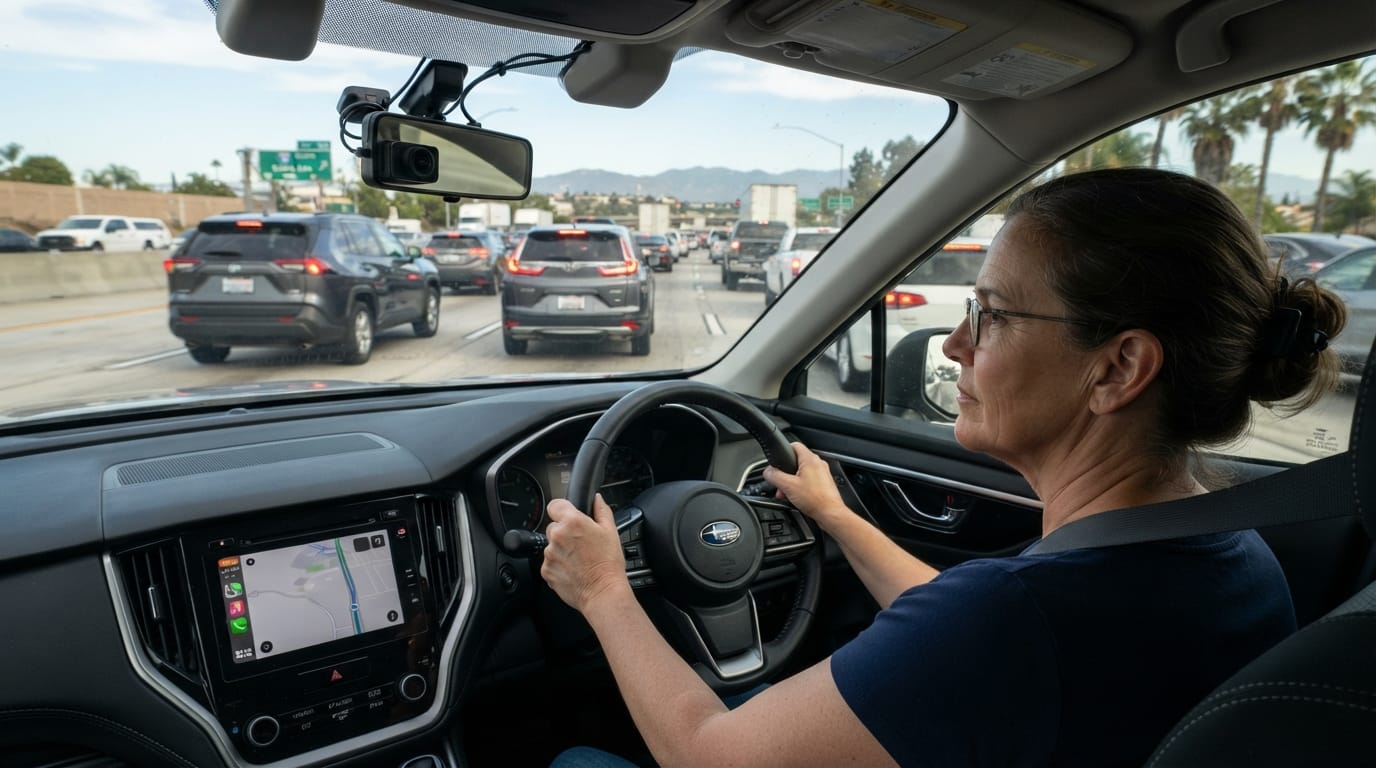
In simple terms, blind-spot systems monitor the area beside and slightly behind the vehicle. They may use radar, sensors, or cameras to detect another road user in a position the driver might miss in the mirror. Some systems only provide a warning. Others may add a steering correction or braking input if the driver begins moving toward an occupied lane. That sounds impressive, but the legal problem starts when people treat “assist” like “guarantee.”
Why the technology does not end driver negligence
A driver still has to check mirrors, look over when needed, signal, judge distance, and make sure a lane change can be completed safely. Technology does not erase that duty. If a driver drifts into a motorcycle during traffic movement, the existence of a warning system does not automatically excuse the crash. In fact, it can make the case more interesting, because the defense may need to explain whether the system alerted, whether it was working properly, and why the driver still moved anyway.
Why motorcycles still create difficult visibility disputes
Motorcycles are smaller than passenger vehicles, they can be masked by road geometry, and they can move through changing traffic patterns in ways that confuse inattentive drivers. But none of that means the rider is automatically at fault. It means the case must be investigated carefully. The real issue is not whether motorcycles are easy to miss. The issue is whether a reasonably careful driver should have seen the rider in time and avoided the move that caused the collision.
How Fault and Compensation Work After a Blind-Spot Motorcycle Crash
These cases are often decided under ordinary negligence and comparative fault principles. That means the analysis usually focuses on what the driver did, what the rider did, what each person could see, and whether either party acted unreasonably under the conditions. A driver may blame the rider for riding in a blind spot too long. A rider may say the driver changed lanes without warning. Both claims may be partly true, which is exactly why evidence matters so much.
What evidence matters most in these cases
The strongest blind-spot motorcycle claims are built with timing evidence. Helmet-cam footage, AI dashcam footage, vehicle event data, witness statements, app-based route logs, surveillance footage, vehicle damage patterns, lane markings, and final resting positions can all help reconstruct what happened. In a modern case, it can also matter whether the at-fault vehicle had a driver-assistance package, whether there were warning indicators, and whether repair or diagnostic records reveal anything useful about system performance.
This is where your existing AI evidence article becomes a natural internal link. Riders reading this post are exactly the kind of audience that needs to understand why digital proof can beat vague memory. When the defense says the bike came out of nowhere, good video often tells a different story.
What riders should preserve right away
First, get medical care. Second, preserve your footage before it is overwritten. Third, photograph the motorcycle, the other vehicle, the roadway, debris, lane markings, and the area where the lane change happened. Fourth, identify witnesses quickly. Fifth, do not let the insurance company lock the story down before you understand the facts. If the other vehicle had advanced driver-assistance features, that may become part of the investigation. The sooner that possibility is raised, the harder it is for useful evidence to vanish.
What damages may be available to an injured rider
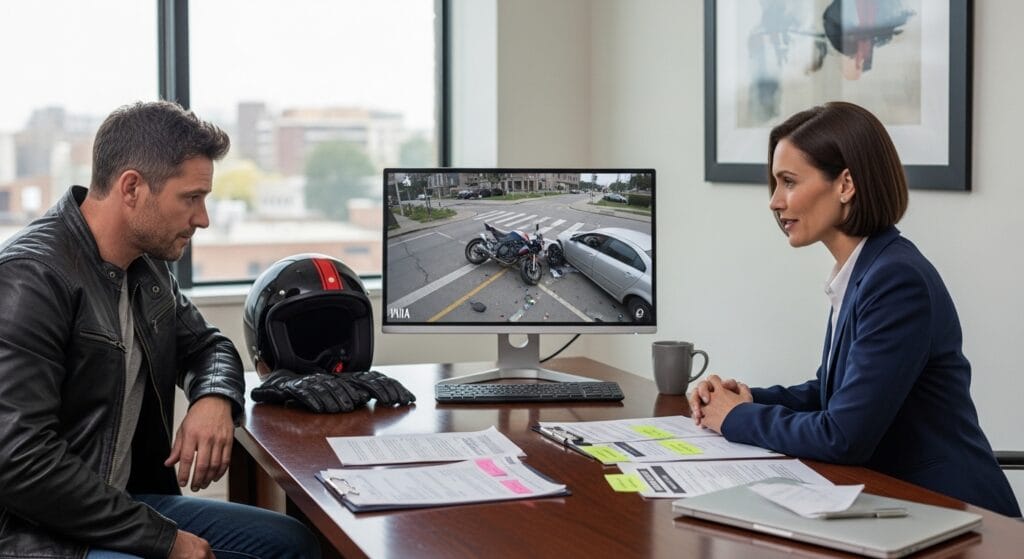
If fault can be established, a rider may pursue damages for emergency care, surgery, hospitalization, follow-up treatment, physical therapy, medication, lost wages, reduced earning capacity, bike damage, pain and suffering, and long-term physical limitations. Side-swipe and lane-change motorcycle crashes often lead to shoulder injuries, broken wrists, leg trauma, road rash, spinal injuries, and head injuries even when speeds are not extremely high. That is because riders do not need a massive impact to be thrown hard onto pavement.
Insurance fights in these cases can get ugly fast. The carrier may use the presence of driver-assistance technology to suggest the crash should not have happened unless the rider did something unexpected. That argument sounds slick, but it is not proof. Technology can reduce risk without eliminating collisions, and a negligent driver can still ignore warnings, misjudge speed, or change lanes unsafely. A serious legal analysis looks at what actually happened, not what the dashboard marketing promised.
Why this topic fits your site right now
This article works for your site because it extends the same visibility-and-proof theme already running through your recent content. It connects naturally to lane splitting, AI dashcams, left-turn collisions, hit-and-run evidence, and broader rider-rights guidance. It also gives you a current topic with search value because drivers are hearing more about assisted driving every year, while riders are still getting hit in familiar old ways. That contrast is exactly what makes blind-spot detection motorcycle crashes such a strong legal blog topic in 2026.
The bottom line is simple. Driver-assistance technology may help reduce some crashes, but it does not replace attention, judgment, or legal responsibility. When a driver turns into a rider’s path, the case should not be decided by faith in a sensor. It should be decided by evidence, visibility, lane movement, timing, and whether the driver used reasonable care before moving into danger.
For general information on how these systems work, readers can review the NHTSA Driver Assistance Technologies page.