A motorcycle helmet injury claim can become one of the most serious types of accident cases. A helmet can reduce the risk of death and head trauma, but it cannot prevent every brain injury. Riders can still suffer concussions, skull fractures, facial injuries, neck trauma, nerve damage, memory problems, dizziness, headaches, vision issues, and long-term cognitive changes.
Motorcycle crashes remain a major safety issue in 2026. The National Highway Traffic Safety Administration reports that 6,228 motorcyclists were killed in traffic crashes in 2024. That number represented 16% of all traffic fatalities. NHTSA also says motorcyclists were almost 27 times more likely than passenger car occupants to die in a crash per vehicle miles traveled. Readers can review the official safety page here: NHTSA Motorcycle Safety.
Those numbers matter because helmet and brain injury cases are often disputed. Insurance companies may try to blame the rider. They may argue the rider wore the wrong helmet, failed to wear a helmet, had a preexisting condition, exaggerated symptoms, or caused the crash. A strong claim must answer those defenses with medical records, helmet evidence, crash proof, and clear documentation.
For injured riders, the key point is simple. A helmet issue should not distract from the full investigation. The claim should look at the driver’s conduct, road conditions, impact force, medical diagnosis, helmet condition, and long-term harm.
Why Motorcycle Helmet Injury Claims Are Different
A motorcycle crash can injure the head and brain even when the rider wears a helmet. The brain can move inside the skull during impact. A rider may also suffer rotational forces when the head twists. These forces can cause symptoms that do not always appear on basic imaging.
This creates a problem in insurance claims. A rider may feel dizzy, confused, sensitive to light, nauseated, or mentally foggy. Yet an insurance adjuster may focus only on whether a scan shows a visible bleed or fracture. That approach can undervalue a real injury.
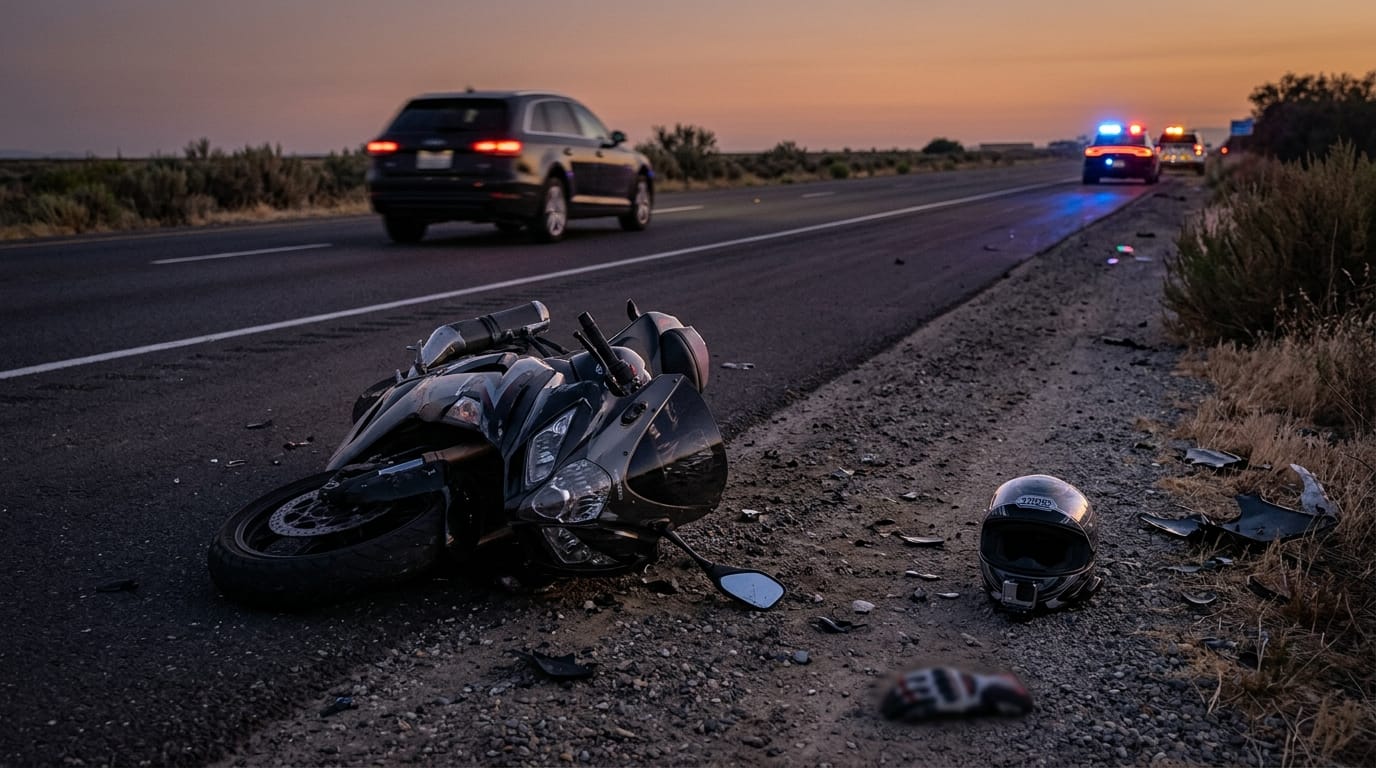
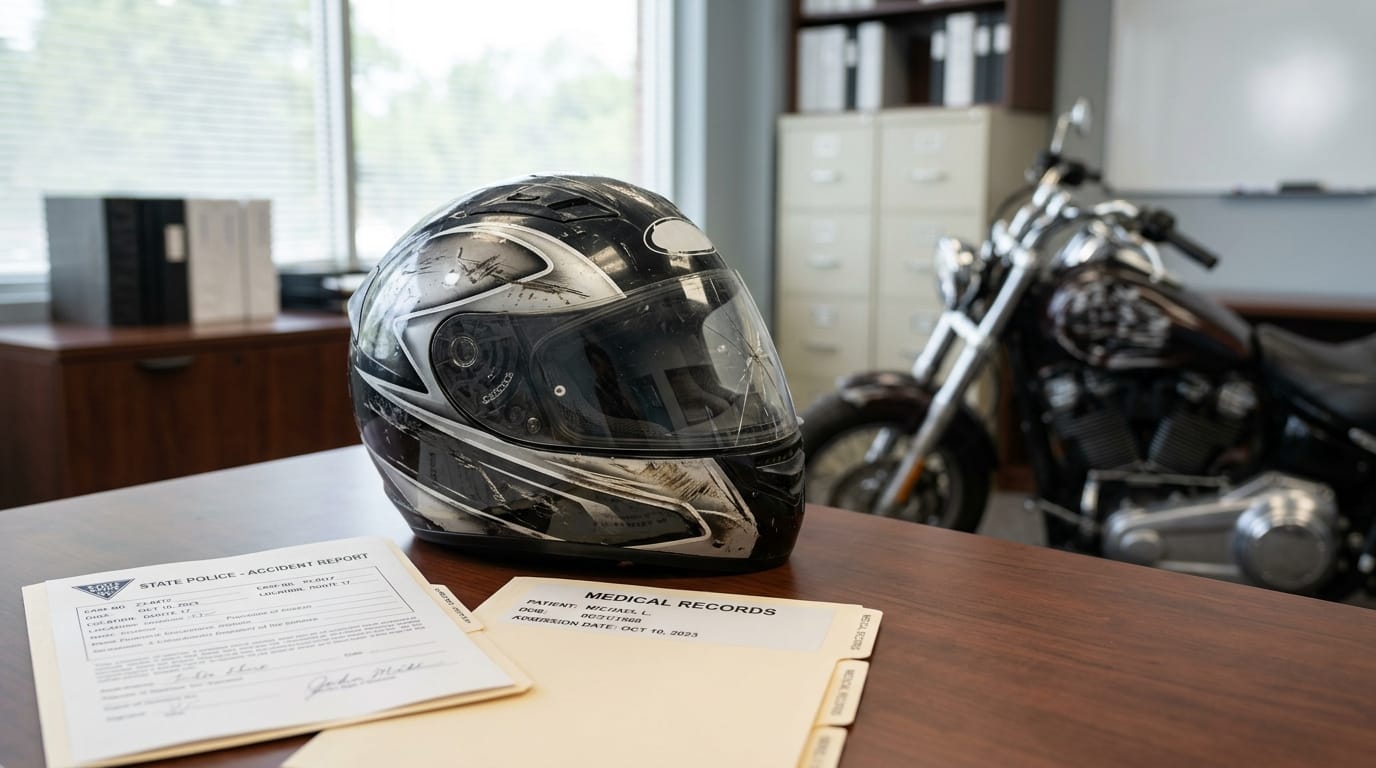
A helmet can also become important evidence. Scratches, cracks, dents, visor damage, strap damage, and impact marks may show how hard the rider hit the ground, vehicle, or roadway. If the rider throws the helmet away, a key piece of proof may disappear.
California also remains a major motorcycle safety state. The California Office of Traffic Safety reported that 583 motorcyclists were killed on California roads in 2023. OTS also says motorcycle crashes are a major traffic safety concern in the state. Readers can review the official California safety source here: California Office of Traffic Safety Motorcycle Safety.
DOT-compliant helmets can affect the insurance discussion
NHTSA reminds riders to use DOT-compliant motorcycle helmets. A proper helmet can help reduce the risk of severe head injury. It can also make a difference when an insurance company tries to blame the rider after a crash.
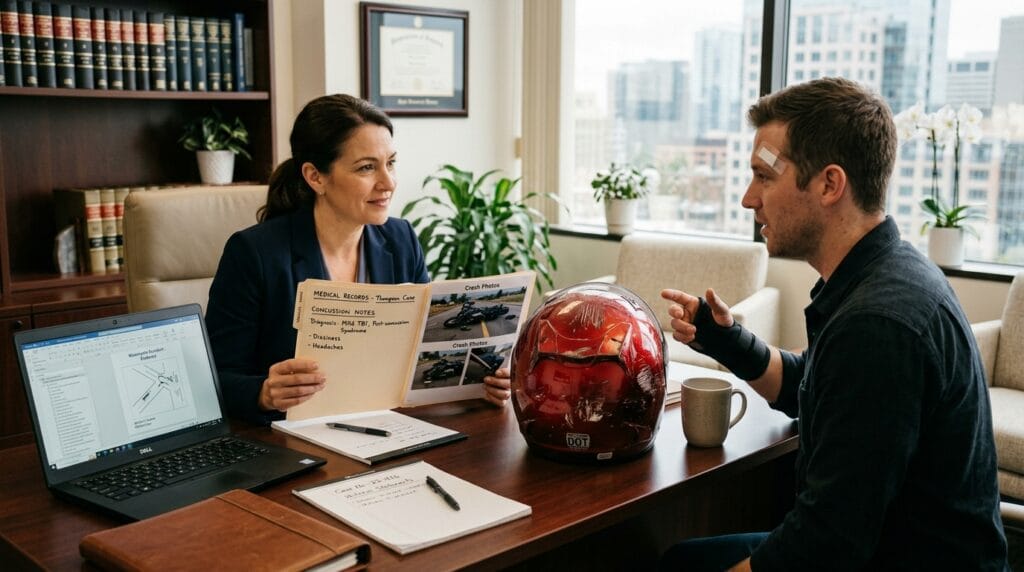
If the rider wore a DOT-compliant helmet, that fact may help push back against unfair arguments. The insurer may still dispute the injury, but it becomes harder to claim the rider ignored basic safety. Photos of the helmet, purchase records, helmet labels, and damaged gear can help.
If the rider did not wear a helmet, the claim may become more difficult. That does not always end the case. The driver who caused the crash may still be responsible. However, the insurance company may argue that the lack of a helmet made the head injury worse.
Helmet evidence should be preserved after the crash
After a crash, riders should keep the helmet. Do not repair it. Do not clean off marks before taking photos. Do not throw it away because it looks destroyed. The helmet may help explain impact angle, force, and injury mechanism.
Take photos from every side. Capture the outer shell, visor, chin bar, straps, padding, labels, and damaged areas. Also save the jacket, gloves, boots, pants, camera mount, and communication device if they show impact damage.
This evidence can support the rider’s account. It can also help an expert explain how the crash caused a concussion, skull injury, neck injury, or facial trauma. In serious cases, the helmet may become as important as the motorcycle itself.
A good helmet does not erase driver fault
Insurance companies sometimes shift the focus away from the driver. They may ask more about the helmet than the unsafe lane change, left turn, blind spot, or speeding vehicle that caused the crash. Riders should not let that happen.
A helmet is safety equipment. It does not give drivers permission to be careless. A driver must still check mirrors, yield, watch for motorcycles, avoid distracted driving, and follow traffic laws.
If a driver caused the impact, the claim should stay focused on fault and damages. Helmet evidence can help explain the injury, but it should not replace the crash investigation.
Brain injury symptoms may appear after the scene clears
Some motorcycle brain injury symptoms appear right away. Others develop hours or days later. A rider may walk away from the scene and then feel worse later that night. That delay can create insurance problems if the rider does not get medical care quickly.
Common symptoms include headache, dizziness, nausea, confusion, memory problems, light sensitivity, ringing in the ears, mood changes, sleep problems, blurry vision, balance problems, and trouble concentrating. These symptoms need attention.
Medical documentation matters. Your site already has a helpful article about motorcycle injury documentation and evidence. That internal link fits well because brain injury claims often depend on clear medical records and symptom tracking.
Emergency records and follow-up care matter
A rider should seek medical care after any crash involving head impact, helmet damage, confusion, dizziness, loss of consciousness, vomiting, or severe headache. Emergency records can show the first signs of injury. Follow-up visits can show whether symptoms continued.
Primary care doctors, neurologists, neuropsychologists, eye specialists, physical therapists, and concussion clinics may all become part of the treatment record. Each visit can help document the injury’s effect on work, driving, sleep, memory, mood, and daily life.
Do not minimize symptoms. Some riders try to sound tough. That can hurt the claim. Doctors need accurate information, and insurance companies will compare the medical notes against the demand for compensation.
How Insurance Companies Defend Motorcycle Helmet Injury Claims
Insurance companies often look for ways to reduce a motorcycle helmet injury claim. They may argue the rider caused the crash. They may also argue the rider’s symptoms came from stress, age, prior injury, migraines, medication, or another event.
These defenses can become aggressive because brain injury claims may carry high value. A serious traumatic brain injury can affect earning ability, memory, speech, movement, emotional control, relationships, and independence. Even a concussion can cause months of problems for some riders.
The strongest response is evidence. Riders need crash evidence, medical evidence, and daily-life evidence. Those three categories work together. Crash evidence shows how the injury happened. Medical evidence shows the diagnosis and treatment. Daily-life evidence shows how the injury changed the rider’s routine.
Crash evidence can connect the helmet damage to the injury
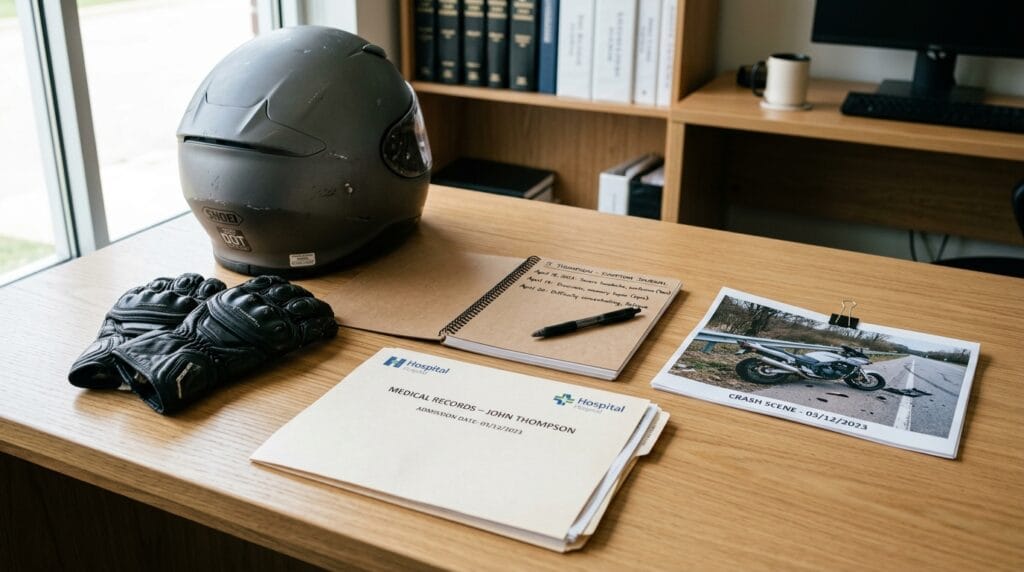
Crash evidence may include helmet photos, motorcycle damage, vehicle damage, police reports, witness statements, road marks, traffic camera footage, dashcam footage, helmet camera footage, and black box data. Each piece can help explain the force of impact.
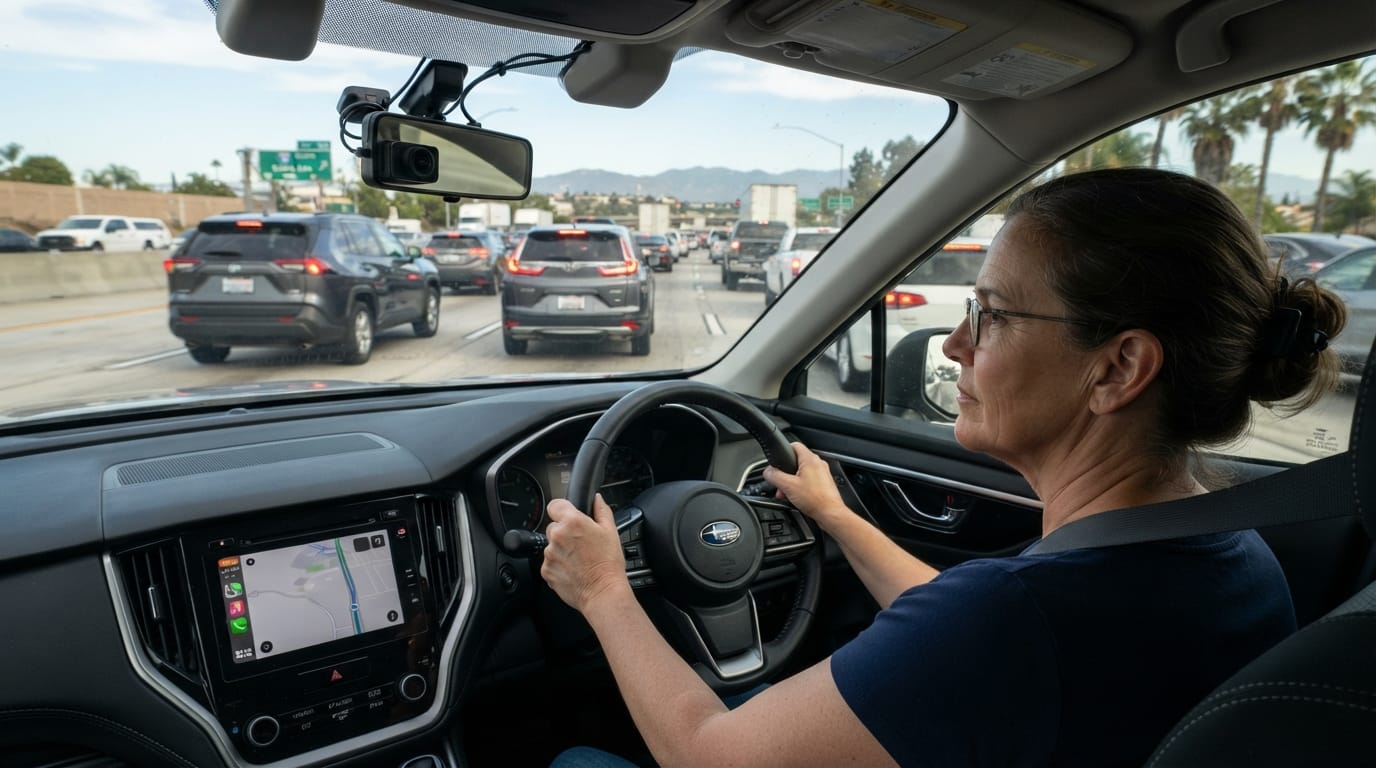
Your site already has a related article on AI dashcams and motorcycle accident evidence. That article supports this topic because video can show impact sequence, driver behavior, lane position, and whether the rider had time to react.
Blind spot crashes also connect well with helmet injury claims. A driver may say, “I never saw the rider,” after changing lanes or turning across the motorcycle’s path. Your site’s article on California motorcycle blind spot accident claims can support readers who need more fault-specific guidance.
Do not give a rushed recorded statement
An adjuster may call soon after the crash. They may ask whether the rider remembers everything. They may ask if the rider hit their head. They may ask if the helmet was damaged. These questions can sound routine, but the answers may affect the claim.
A rider with a concussion may not remember the crash clearly. Guessing can create problems. Saying “I feel fine” can also hurt the claim if symptoms worsen later. Keep statements short and factual until medical care and evidence review are complete.
Also avoid social media posts about the crash. A photo, joke, ride update, or casual comment can appear out of context. Insurance companies may use public posts to argue the rider recovered quickly or exaggerated symptoms.
Future damages should be reviewed before settlement
A helmet injury claim should not settle before the full injury picture becomes clear. Brain symptoms can affect work, concentration, sleep, mood, driving confidence, and family life. Some riders need therapy, medication, specialist care, or time away from work.
Future damages may include medical care, lost income, reduced earning ability, pain and suffering, cognitive therapy, transportation costs, and help with daily tasks. Severe cases may involve permanent disability or long-term supervision.
Once a rider signs a release, the claim usually ends. That is why quick settlement offers can be risky. A low offer may not include future treatment, long-term symptoms, or the full human impact of a brain injury.
A motorcycle helmet injury claim requires more than proof that the rider wore a helmet. It requires proof of fault, injury, damages, and long-term effect. The helmet can tell part of the story, but medical records and crash evidence complete it.
If you suffered a head injury after a motorcycle crash, protect the evidence early. Save the helmet, document symptoms, get medical care, preserve video, avoid rushed statements, and review the full claim before accepting a settlement. For more rider-focused legal guidance, visit the Motorcycle Accident Law Firm blog or the services page.