A motorcycle airbag vest accident claim raises new questions after a crash. Riders now use more advanced protective gear than ever before. Airbag vests, armored jackets, smart helmets, riding cameras, and connected devices have become part of modern motorcycle safety. However, this new gear can also create new evidence issues after an accident.
Protective gear may support a rider’s claim, but insurers may still challenge it. An adjuster may ask whether the vest deployed, whether the rider charged it, whether it fit correctly, or whether the rider followed the manufacturer’s instructions. Those questions may sound technical. Still, they can affect how an insurance company evaluates the injury claim.
Riders should understand one important point. A motorcycle airbag vest can reduce some injury risks, but it cannot prevent every injury. A serious crash can still cause fractures, road rash, head trauma, shoulder damage, leg injuries, back pain, or internal injuries. Therefore, the vest should support the evidence story, not replace medical proof.
This guide explains how a motorcycle airbag vest accident claim may work in 2026. It also explains why riders should preserve the vest, helmet, jacket, gloves, boots, medical records, crash photos, and digital data after a collision.
Why Motorcycle Airbag Vest Evidence Matters in 2026
Motorcycle riders face higher injury risks because they do not have the same protection as people inside passenger vehicles. A car has a steel frame, seat belt, airbags, and crumple zones. A rider depends much more on awareness, skill, road conditions, driver behavior, and protective gear.
Airbag vests have gained attention because they may help protect the chest, ribs, back, neck, and spine. Some systems use a tether that connects the rider to the motorcycle. Other systems use electronic sensors to detect a crash. In both cases, the goal is to inflate quickly enough to reduce impact force.
Research interest in wearable motorcycle airbags is also growing. A 2025 PubMed-indexed study discussed airbag use among powered two-wheeler users involved in road traffic crashes and noted that more riders used the gear over time. You can review the outside authority here: PubMed wearable motorcycle airbag study.
Even so, no safety product works perfectly in every crash. Speed, angle, impact surface, body position, traffic movement, and deployment timing can all affect the outcome. For that reason, a motorcycle airbag vest accident claim should focus on facts instead of assumptions.
Protective gear can support the rider’s credibility
Insurance companies often try to blame motorcyclists. They may claim the rider accepted too much risk, rode too fast, changed lanes carelessly, or failed to protect themselves. Protective gear can help push back against that stereotype.
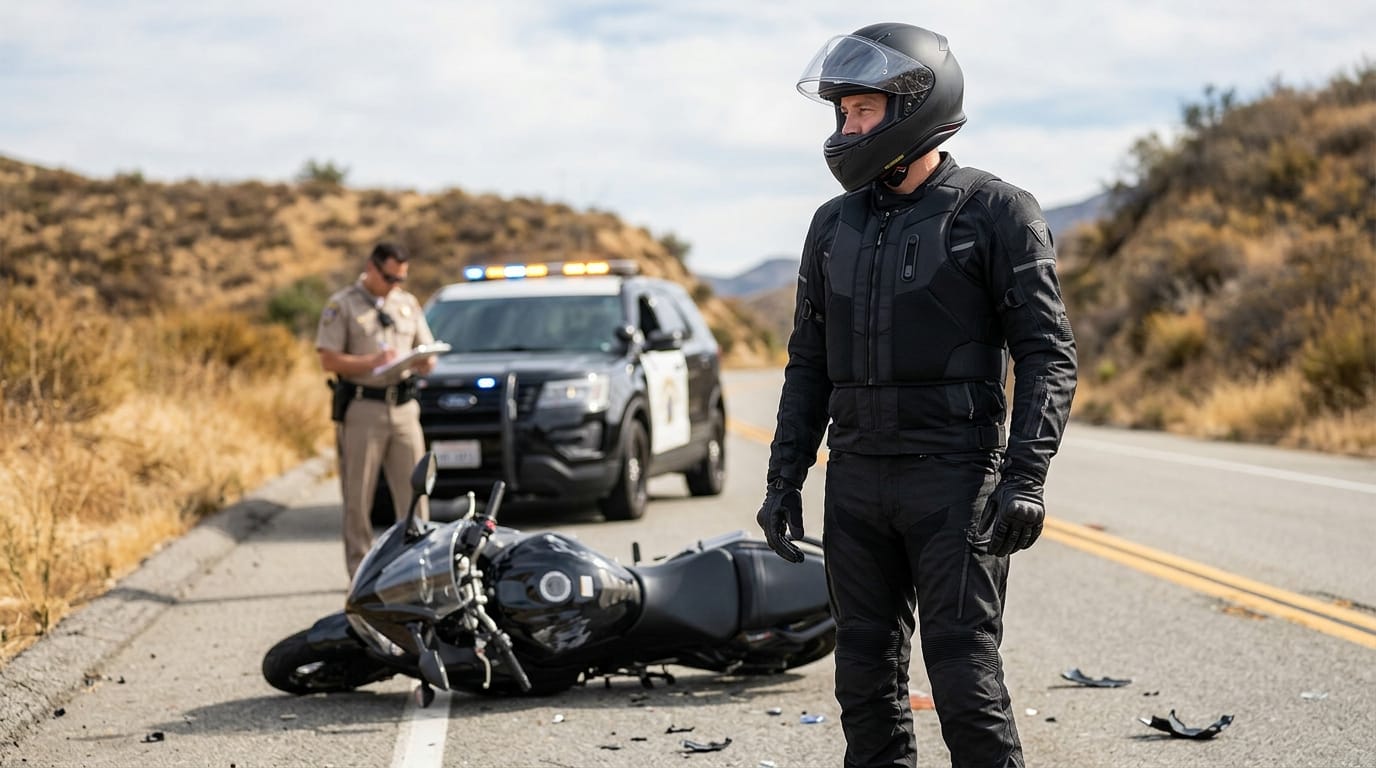
A rider who wore a helmet, gloves, boots, armored clothing, and an airbag vest can show a serious approach to safety. That does not automatically prove the other driver caused the crash. However, it can help show that the rider did not ignore basic precautions.
This point matters when the crash involved a driver who turned left, drifted lanes, followed too closely, opened a door, or failed to yield. In those cases, the rider’s gear may help support a fairer picture of what happened.
For more injury-related evidence, read our guide on the most common motorcycle accident injuries and how to prove them in court. It explains why imaging, medical records, and expert support matter after serious crashes.
The vest should stay preserved after the crash
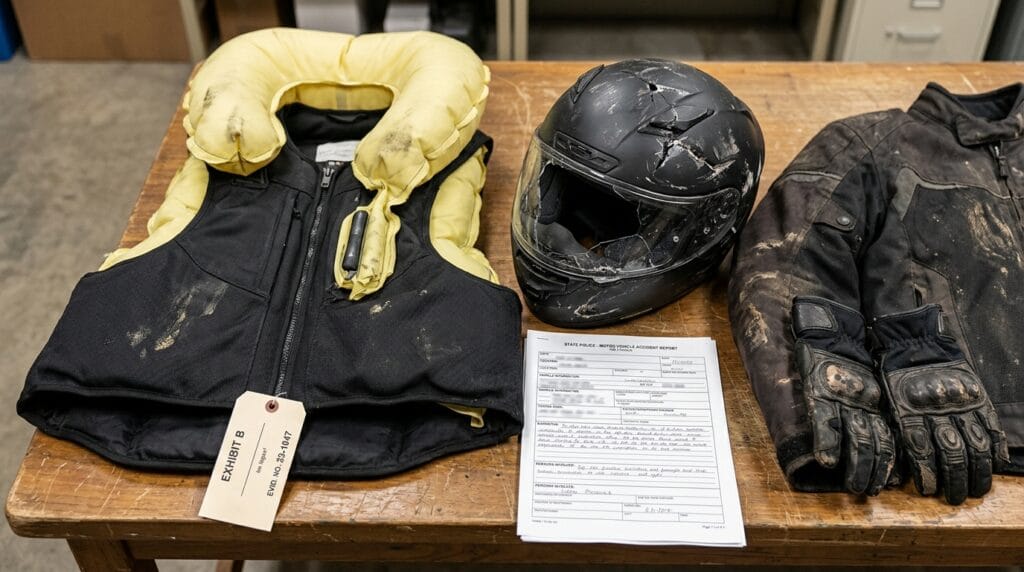
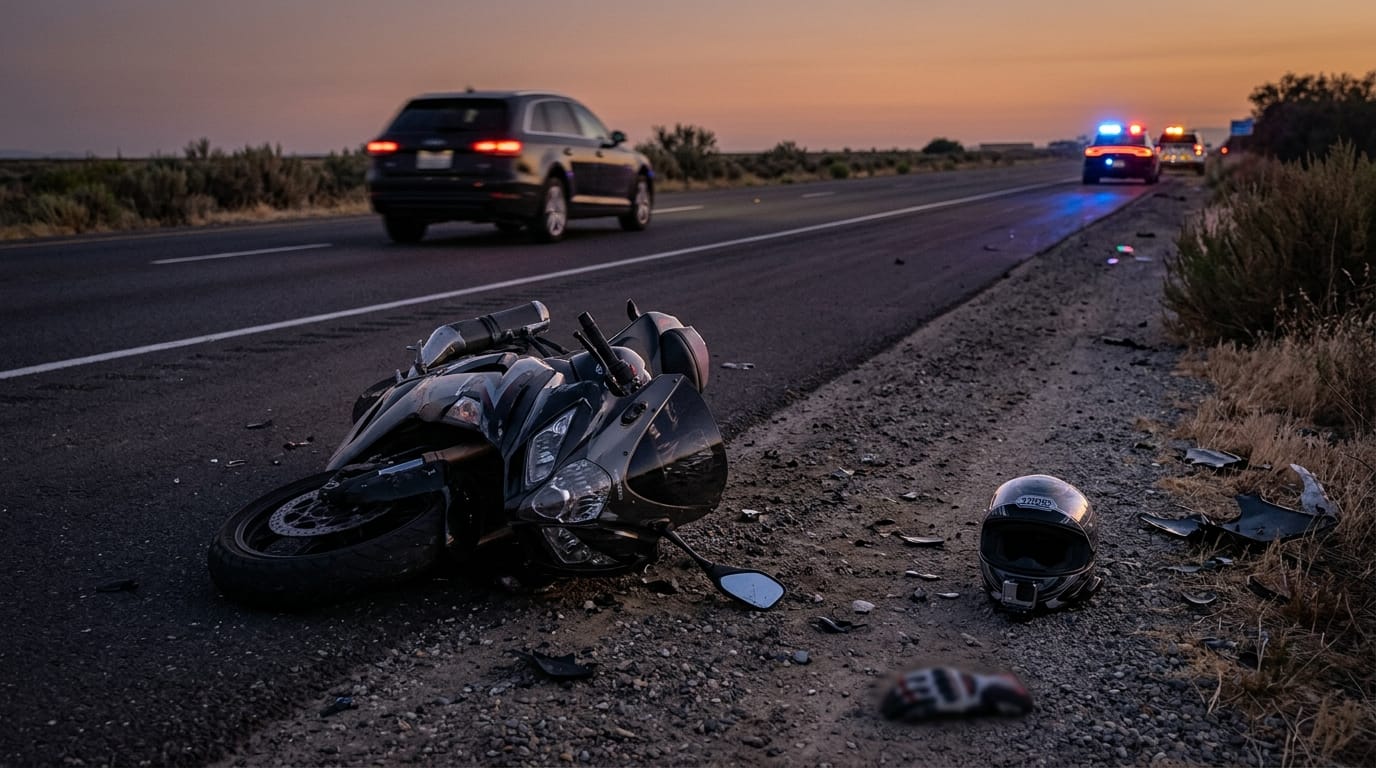
Do not throw away the airbag vest after a collision. Do not repair it right away. Also, avoid resetting, recharging, cleaning, or altering it before taking photos. The vest may show deployment status, tears, abrasions, broken buckles, cartridge use, sensor damage, or impact marks.
Keep the helmet, jacket, gloves, pants, and boots as well. These items may show slide marks, crush damage, blood, torn fabric, or contact points. Store everything in a dry and safe place. Then photograph each item from several angles.
If the vest connects to an app, save screenshots. These may show deployment alerts, battery status, crash detection, ride history, or device errors. Purchase receipts, service records, manuals, and cartridge details can also help explain how the system worked before the crash.
Deployment data does not tell the whole injury story
Insurers may oversimplify the deployment issue. If the vest inflated, they may argue that the rider should not have suffered serious injuries. If it did not inflate, they may suggest the rider used it incorrectly. Both arguments can miss the real medical picture.
A vest protects only certain parts of the body. It does not protect every joint, bone, organ, or exposed surface. A rider may still suffer a broken leg, torn ligament, wrist fracture, concussion, shoulder injury, or severe road rash.
Also, some crash types may not trigger a specific airbag system. Each product has design limits. Therefore, deployment status should become one part of the evidence, not the only issue in the claim.
Insurers may challenge the protective gear story
Protective gear can help a rider, but an insurance company may still use it to reduce payment. Adjusters may ask whether the vest fit properly. They may question the rider’s setup, maintenance, battery status, subscription, or cartridge condition. Some questions may be fair. Others may distract from the driver’s negligence.
The key issue remains fault. Did a driver fail to yield? Did a car turn across the motorcycle’s path? Did another vehicle drift into the lane? Did someone follow too closely? Did a distracted driver fail to see the rider?
Those facts matter more than speculation about the vest. A motorcycle airbag vest accident claim should separate two questions. First, who caused the crash? Second, what injuries did the crash cause?
Insurance arguments often overlap with comparative fault. Read our guide on understanding comparative fault in motorcycle accidents. It explains how insurers may try to shift part of the blame to the rider.
Protective gear does not excuse negligent driving
A careless driver cannot avoid responsibility by pointing to the rider’s equipment. Protective gear may reduce injury risk, but it does not make unsafe driving acceptable. Drivers still must check mirrors, yield, follow at a safe distance, obey signals, and watch for motorcycles.
For example, a driver who turns left across a rider’s path may still bear responsibility. A driver who looks at a phone before impact may still face liability. A driver who changes lanes without checking a blind spot cannot blame the rider’s vest for the crash.
Good gear can support the rider’s credibility. Still, it should not become a tool for unfair blame. The evidence should focus on driver conduct, road conditions, vehicle movement, impact details, and medical proof.
How to Build a Strong Motorcycle Airbag Vest Accident Claim
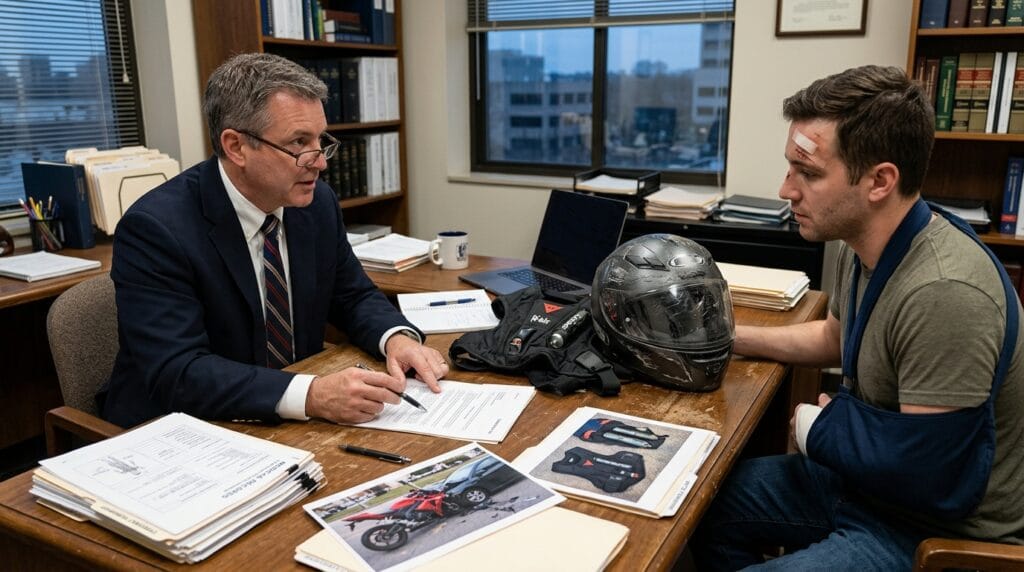
A strong claim starts with medical care. Riders should get checked even when the vest deploys correctly. Chest pain, back pain, neck stiffness, dizziness, numbness, abdominal pain, breathing trouble, and shoulder pain deserve prompt attention.
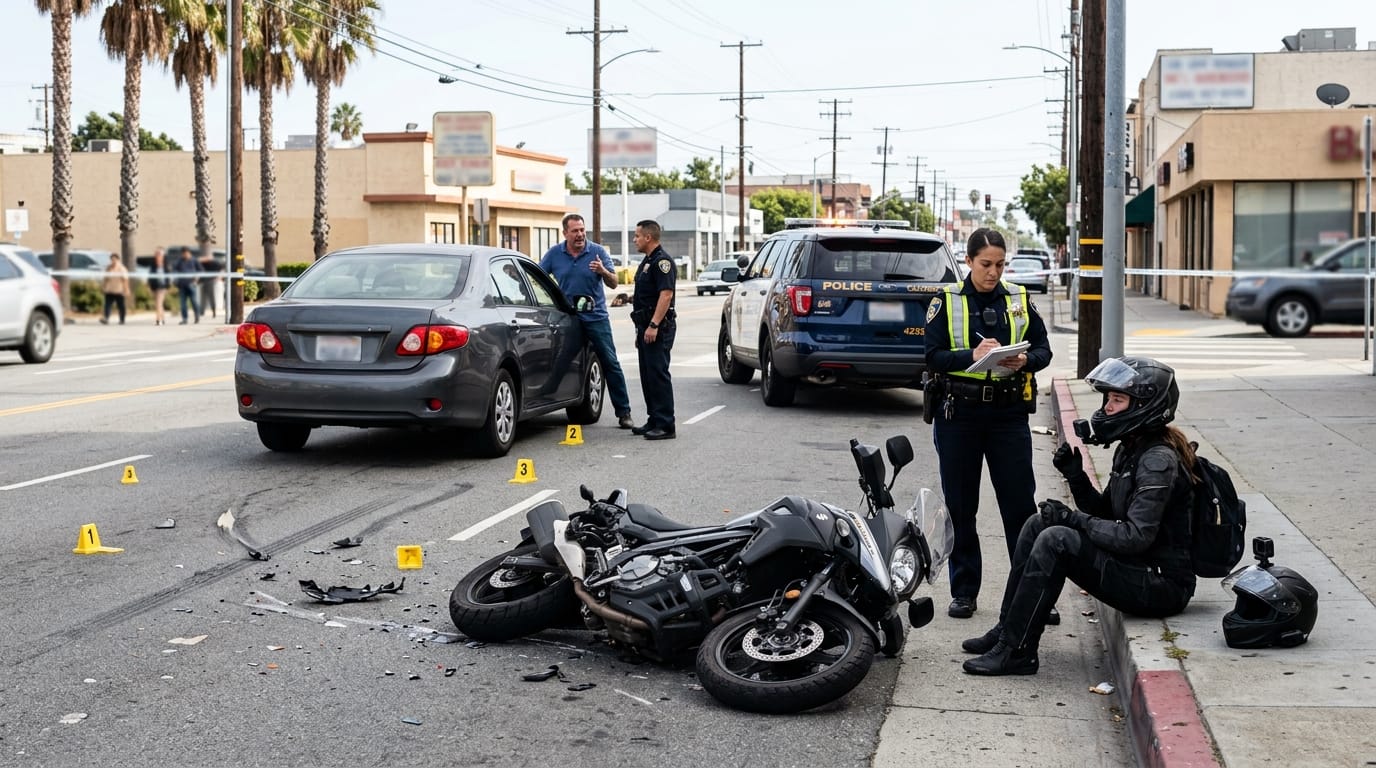
Next, document the crash scene. Take photos of vehicle positions, motorcycle damage, traffic signs, skid marks, debris, road defects, lighting, and weather conditions. Also photograph visible injuries and all protective gear.
For a complete evidence checklist, read how to document your motorcycle accident for a strong legal case. Strong documentation can stop an insurer from changing the story later.
Medical records also carry major weight. They should connect the crash to the injuries. They should also explain symptoms, diagnosis, imaging results, treatment plans, pain levels, work restrictions, and future care needs. For more help, review motorcycle injury documentation and why medical records matter.
Check whether the vest creates a product issue
Sometimes the vest only serves as evidence. In other cases, the vest itself may need closer review. A product issue may exist if the vest failed during a crash that should have triggered deployment. It may also matter if the system inflated too late or malfunctioned because of a cartridge, sensor, battery, software, or manufacturing problem.
Not every non-deployment creates a product claim. These systems have limits, and some crash types may fall outside the product’s design conditions. However, riders should preserve the device when something seems wrong.
Do not send the vest back to the manufacturer without documenting it first. Do not let an insurer inspect it without a clear record. Instead, keep the product, packaging, purchase records, service history, and app data together.
This issue connects with motorcycle product liability more broadly. Read our guide on motorcycle recalls and defect-related accidents in 2026. The same rule applies: preserve key evidence before anyone repairs, replaces, or discards it.
Crash trends also matter. Motorcycle accidents remain serious across California and nationwide. For broader context, see our article on California motorcycle accident statistics and safety trends.
Keep the insurer from controlling the gear narrative
After a crash, an insurer may ask for photos, statements, or access to the vest. Stay careful. Do not guess about how the vest worked. Also, avoid saying it “failed” unless the facts support that conclusion. On the other hand, do not say it prevented injury when doctors have not completed the evaluation.
A better approach is simple. Preserve the gear. Save the app data. Photograph the crash scene. Get medical care. Keep every record connected to the vest and the ride. Then let the evidence explain what happened.
In the end, a motorcycle airbag vest accident claim is about proof. Protective gear can support the rider’s credibility, show impact details, and help explain the injury pattern. However, it does not make riders invincible. It also does not excuse negligent drivers.
In 2026, advanced riding gear has become part of the legal evidence picture. Riders should treat it that way. Keep the vest, helmet, jacket, gloves, boots, medical records, crash photos, and digital data together. The more complete the evidence, the harder it becomes for an insurer to minimize the injury or shift blame without support.