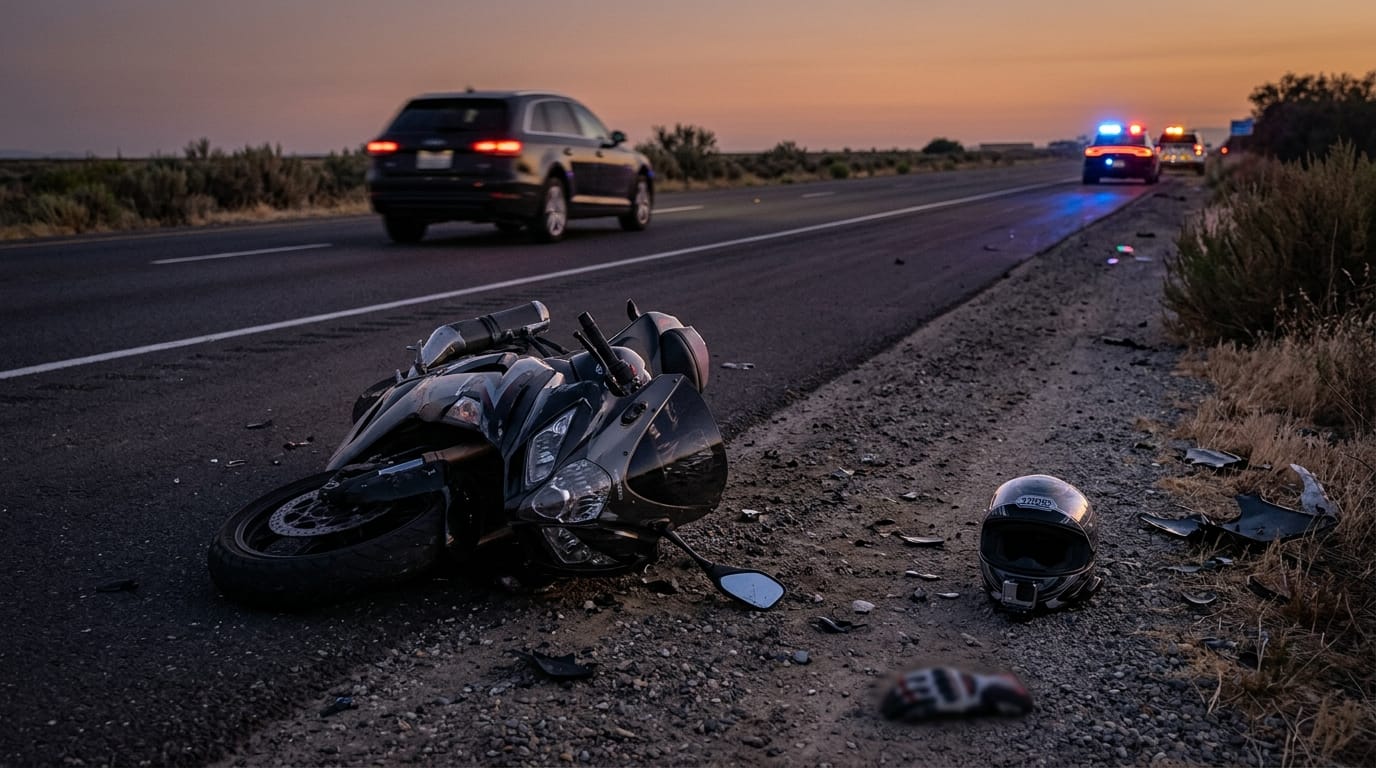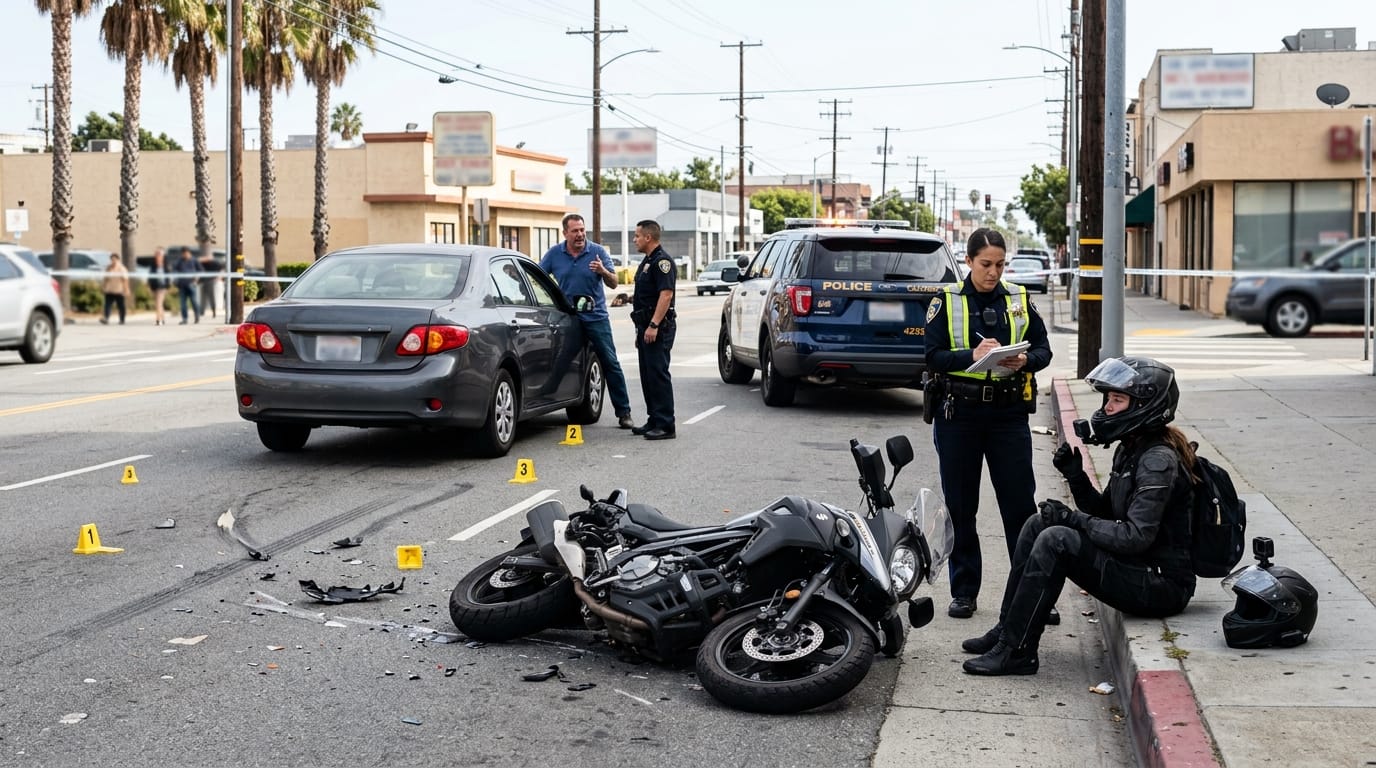

Lane splitting is one of the most misunderstood parts of motorcycle accident law in California. Riders know it is legal. Drivers often think it is reckless by default. Insurance companies love to treat it like automatic rider fault. That mismatch creates real problems after a crash. A motorcyclist can be riding between lanes in slow traffic, get hit by a driver who suddenly changes lanes, and still hear the same line afterward: “I never saw the motorcycle.”
That is exactly why lane-splitting motorcycle accidents California 2026 claims need careful analysis. The legal issue is not whether lane splitting exists. California law clearly recognizes it. The real issue is whether the rider was splitting in a way that was reasonably safe under the conditions, whether the driver failed to check mirrors or blind spots, and how fault should be divided when both sides blame the other.
These cases are rarely simple. Visibility, speed, lane position, traffic flow, road width, large vehicles, lighting, and rider behavior can all matter. So can the evidence. A weak file gives insurers room to stereotype the rider. A strong file can show exactly how the crash happened and why the driver’s excuse does not hold up.
This topic fits naturally with the rest of Motorcycle Accident Law Firm’s blog. Readers who want broader context can also review Left-Turn Motorcycle Accidents: Why Drivers Are Often at Fault, AI Dashcams and Motorcycle Accident Evidence, and How Insurance Companies Handle Motorcycle Accident Claims.
Why Lane-Splitting Crashes Are So Heavily Disputed
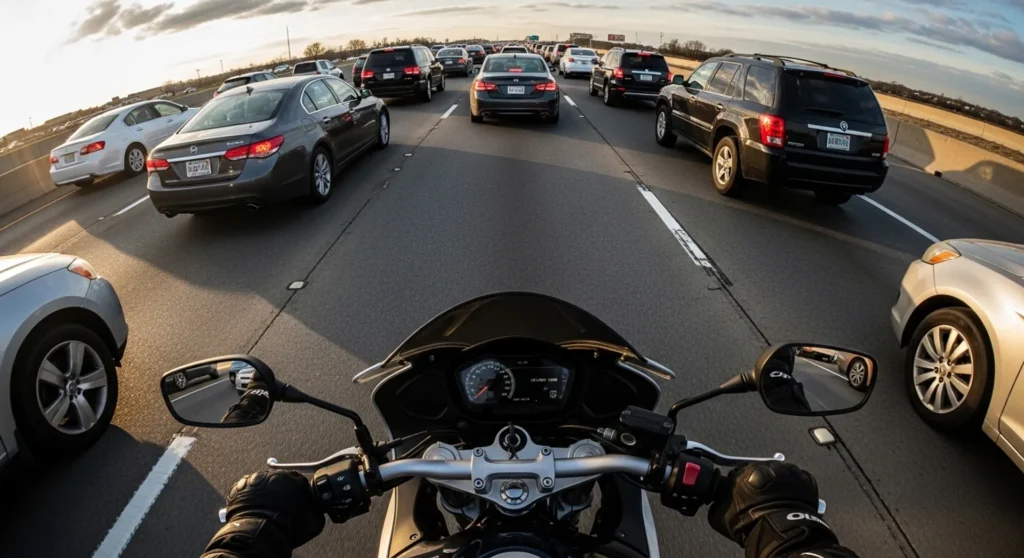
Lane-splitting collisions tend to create instant argument because the impact usually happens in a tight space. A driver may say the rider appeared out of nowhere. A rider may say the driver drifted, darted over, or changed lanes without checking. Unlike a simple rear-end crash, these collisions often depend on seconds, inches, and line-of-sight issues.
California does not ban lane splitting. In fact, Vehicle Code section 21658.1 defines it, and the CHP is authorized to develop safety guidelines for it. That matters because the starting point in these cases is not “Was lane splitting illegal?” The starting point is “Was it done safely enough under the circumstances, and did the driver use reasonable care?”
Legal does not mean immune from blame
This is where many riders get blindsided. A legal maneuver can still be argued as careless if the facts support that position. If the rider was moving too fast for the traffic pattern, splitting next to large vehicles, lingering in blind spots, or threading through conditions that were obviously too tight, the defense may argue comparative fault.
That does not mean the rider loses the case. It means fault becomes shared and contested instead of automatic. California negligence law does not require a motorcyclist to be perfect. It requires a fact-based look at whether the rider and the driver used ordinary care under the conditions.
Drivers still have duties too
The driver’s side of the analysis matters just as much. A driver still has to check mirrors, watch blind spots, signal lane changes, and avoid unsafe movement. Heavy traffic does not erase that duty. Neither does surprise. “I didn’t see the motorcycle” is not a magic defense if the reason the driver did not see the rider is that the driver failed to look carefully before moving.
This is one reason lane-splitting claims overlap so naturally with the site’s left-turn article. In both situations, the core problem is often the same: the motorcyclist was there, but the driver failed to perceive the rider in time.
Visibility is usually the battlefield
Most lane-splitting cases turn into a visibility fight. Was the rider visible long enough to be seen? Was the driver boxed in by large vehicles? Was traffic nearly stopped or still moving at a meaningful speed? Was the motorcycle using headlights, bright gear, or a lane position that improved notice? These details shape liability more than generic opinions about motorcycles ever should.
That is why broad anti-rider bias can be so dangerous in these cases. Some adjusters start from a stereotype that lane splitting itself is reckless. A serious claim needs enough evidence to push the case back to specifics instead of assumptions.
How Fault Is Actually Decided in California Lane-Splitting Cases
Fault in a lane-splitting crash is usually decided through ordinary negligence principles and comparative fault analysis. In plain English, that means investigators, insurers, lawyers, and sometimes juries look at what each side did, what each side should have seen, and whether one or both parties acted unreasonably.
No single fact controls every case. But certain facts show up again and again.
Speed and speed differential matter a lot
The CHP warns that danger increases as overall speed rises and as the speed difference between the motorcycle and surrounding traffic grows. That guidance matters because it gives insurers and juries a common-sense framework. A rider moving only slightly faster than crawling traffic creates a different risk profile than a rider blasting between lanes far faster than surrounding vehicles.
That does not make the faster rider solely at fault every time. But it can change how much fault is assigned. It can also influence how convincing the driver’s “I never saw you” argument becomes. A motorcycle moving much faster than surrounding traffic is harder to perceive and react to than one moving with a modest differential.
Road position and surrounding vehicles also matter
The CHP also notes that it is typically safer to split between the far-left lanes than other traffic lanes, and riders should avoid lane splitting next to large vehicles when possible. These points matter in litigation because they help frame what was reasonably foreseeable. A rider squeezed between a bus and a drifting SUV may face a different fault argument than a rider moving between slow passenger cars with open sightlines.
Conditions matter too. Rain, poor lighting, narrow lanes, construction, damaged pavement, and heavy truck traffic can all change the reasonableness of the rider’s choice. That is one reason this article pairs well with Motorcycle Road Hazard Accidents in California. Sometimes the road itself makes lane splitting more dangerous, even before a driver makes a bad move.
Comparative fault can reduce damages without destroying the case
A lot of injured riders hear “partial fault” and assume the claim is dead. That is not how these cases work. Shared blame can reduce recovery, but it does not automatically eliminate it. If the evidence shows the driver changed lanes unsafely while the rider was also moving faster than ideal, both facts may matter. The case then becomes about percentages, not all-or-nothing blame.
That is why insurers fight so hard over the narrative. Even a modest shift in fault percentage can mean a large shift in money. The earlier the evidence is locked down, the harder it is for the defense to inflate the rider’s share of blame through assumption alone.
What Evidence Helps Riders Win These Cases

Lane-splitting cases are won with detail. General statements like “the car came over” or “the bike came out of nowhere” are not enough by themselves. The best evidence is the kind that shows timing, visibility, position, and movement clearly.
Video evidence can be huge
Helmet cameras, dashcams, traffic cameras, and nearby business surveillance can all matter. Video may show whether the rider was moving at a manageable pace, whether the driver signaled, whether the driver drifted across the line suddenly, and whether traffic conditions were stable or chaotic. This is exactly why the site’s post on AI dashcams and motorcycle accident evidence is so useful here.
Even when the footage is not perfect, it can still help rebut lazy arguments. A clip showing nearly stopped traffic and a modest rider speed can undercut the usual claim that the motorcyclist was rocketing through traffic recklessly.
Physical evidence still matters too
Do not overlook the scene. Damage points on the motorcycle and vehicle, scrape marks, final positions, lane markings, debris spread, and witness angles can all support or weaken the lane-change narrative. The same is true of rider gear. Bright or reflective gear, working headlights, and helmet-cam mounts can all become part of the visibility story.
Witnesses and early statements can shape the whole case
Independent witnesses can be especially valuable because they often have no reason to protect either side. A witness who says the driver jumped lanes without signaling can shift the case fast. So can a witness who says the rider was moving unreasonably quickly. Early driver statements matter too. A driver who says, “I didn’t check because traffic was stopped,” may have just helped prove the problem was not invisibility but inattention.
Medical proof matters as well. The more serious the injury, the more important it is to connect the crash mechanics to the harm that followed. For that reason, this article also pairs well with the site’s existing piece on motorcycle injury documentation.
What Riders Should Do After a Lane-Splitting Crash
First, get medical care. A rider thrown down in traffic can have injuries that are worse than they first appear. Second, preserve evidence fast. Save helmet-cam footage, photos, location data, and contact information for every witness you can identify. Third, be careful with recorded statements. Insurers often try to turn fast-moving, high-pressure interviews into admissions that the rider was reckless.
You should also document the traffic conditions while they are still fresh in your mind. Was traffic stopped or crawling? Which lanes were involved? Was the driver signaling? Were there large vehicles nearby? What was the weather and lighting like? These details fade quickly, and they matter.
Finally, do not assume the phrase “I never saw the motorcycle” ends the analysis. In many motorcycle cases, that statement is exactly what points back to negligence. Drivers are supposed to look for what is there before they move.
Final Thoughts
Lane-splitting motorcycle accidents California 2026 claims are not decided by stereotype. They are decided by facts. California recognizes lane splitting, but that does not make every rider automatically right. At the same time, a driver cannot erase fault just by saying the motorcycle was hard to see. Visibility, speed, lane position, traffic movement, and evidence all matter.
The strongest rider cases are the ones built early and built carefully. Preserve the footage. Photograph the damage. identify witnesses. document the roadway. protect the medical record. And push the case toward what actually happened instead of letting the insurance company reduce it to anti-motorcycle assumptions.
External resource: For official California lane-splitting guidance, visit the California Highway Patrol motorcyclist safety page.