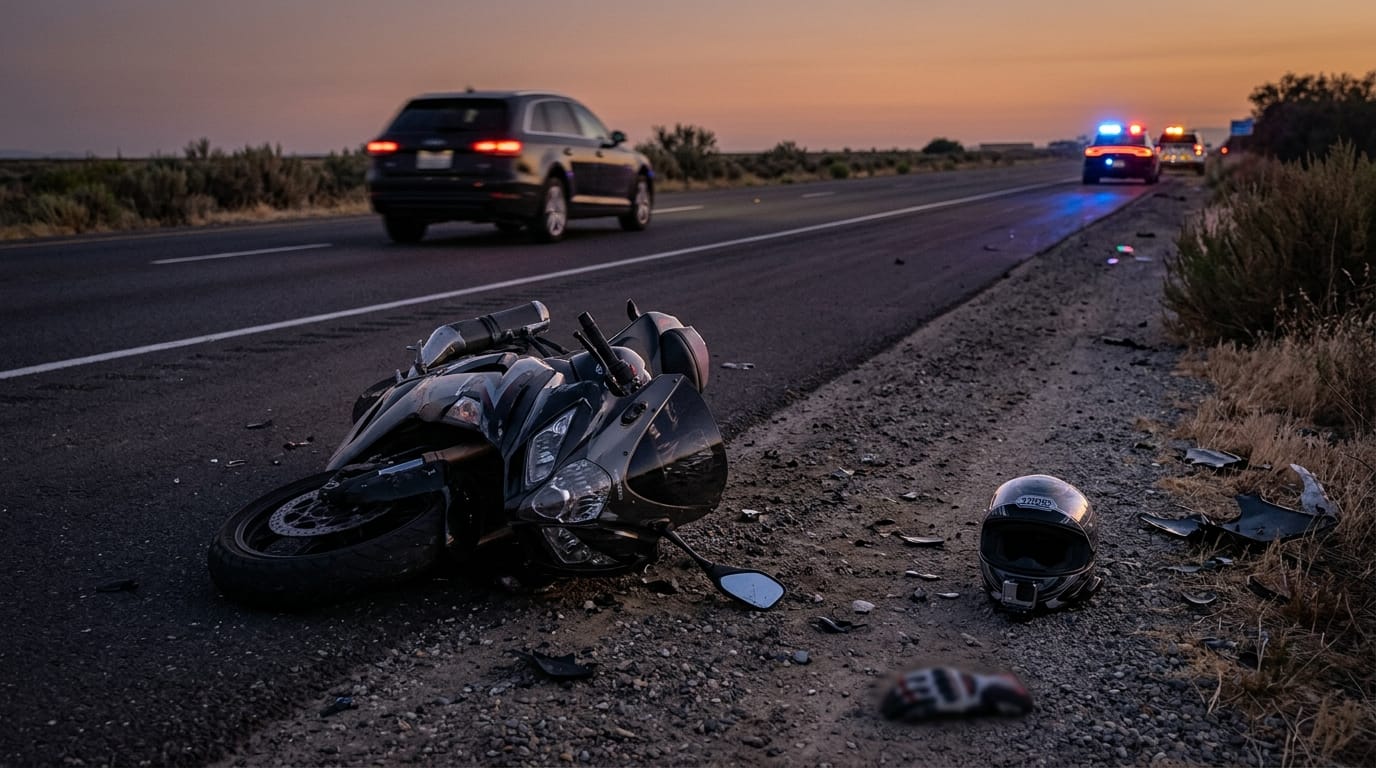
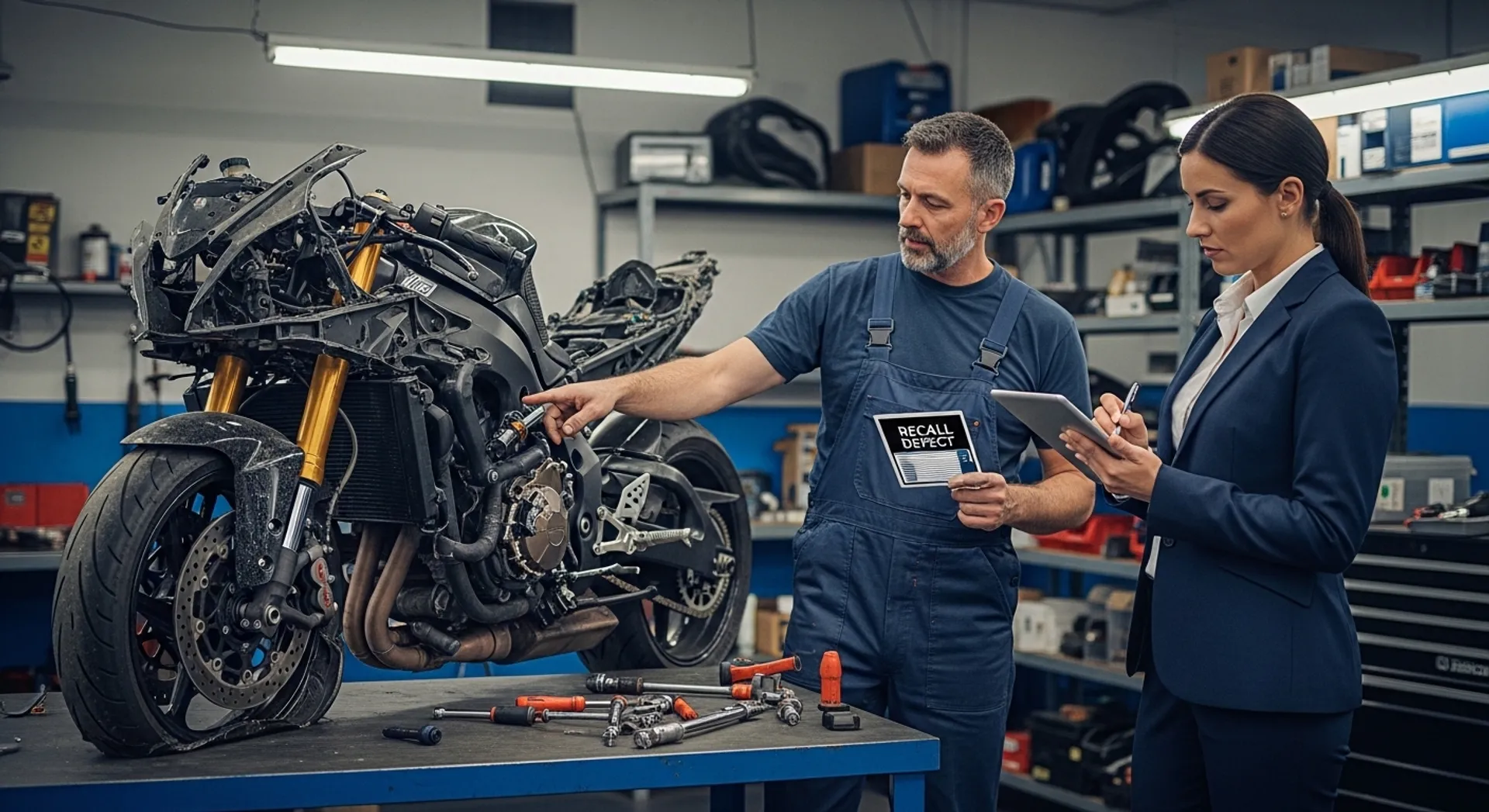
Not every motorcycle crash is caused by speeding, distraction, or rider error. In 2026, one of the most important trends riders need to understand is the growing attention on motorcycle recalls and defect-related accidents. When a motorcycle has a dangerous part, a hidden mechanical issue, or a safety-related defect, the crash may involve more than just another driver’s negligence. It may also involve a manufacturer, distributor, dealership, repair shop, or parts supplier.
That matters because defect cases are very different from ordinary motorcycle accident claims. If a rider loses braking power, suffers a steering failure, experiences a sudden engine stall, or crashes because a safety-critical component fails, the case may shift from simple negligence to product liability. That changes how evidence is collected, how fault is investigated, and how compensation may be pursued.
If you were injured in a motorcycle accident and suspect the bike itself played a role, this is one issue you should not ignore.
Why Motorcycle Recall Cases Matter More in 2026
Motorcycle recalls are getting more attention because riders are paying closer attention to bike safety, while manufacturers and regulators continue identifying serious issues involving braking systems, structural components, electrical systems, and engine performance. A defect that looks minor on paper can become catastrophic at highway speed. Motorcycles do not give riders the margin for error that cars do. A sudden part failure can throw a rider onto the pavement in seconds.
That is what makes these cases so serious. In a passenger vehicle, a brake issue or steering issue is dangerous. On a motorcycle, it can be devastating. Riders have less protection, less stability, and far less room to recover when a critical component fails.
What Is a Motorcycle Recall?
A recall happens when a manufacturer or safety regulator determines that a vehicle or equipment creates an unreasonable safety risk or fails to meet required safety standards. That does not always mean every recalled bike has already caused an accident, but it does mean there is a recognized safety issue serious enough to require notice and a remedy.
In real life, many riders do not find out about a recall until after something goes wrong. Some never received clear notice. Others bought a used bike and had no idea an unresolved recall existed. Some riders had symptoms such as poor braking, warning lights, handling problems, or power issues but did not realize those problems could support a legal claim after a crash.
Common Defects That Can Cause Motorcycle Accidents
Defect-related motorcycle crashes can involve many different mechanical or design problems. Some of the most common include:
- Brake failure or reduced braking performance
- ABS-related malfunctions
- Throttle or acceleration issues
- Steering or suspension failures
- Tire defects or wheel failures
- Engine stalls or sudden power loss
- Electrical failures affecting lights or controls
- Frame, fork, or structural component fractures
When any of these issues show up on a motorcycle, the result can be severe. Even a split second of lost control can cause a rider to strike another vehicle, slide into traffic, or be thrown from the bike entirely.
When a Crash Becomes a Product Liability Case
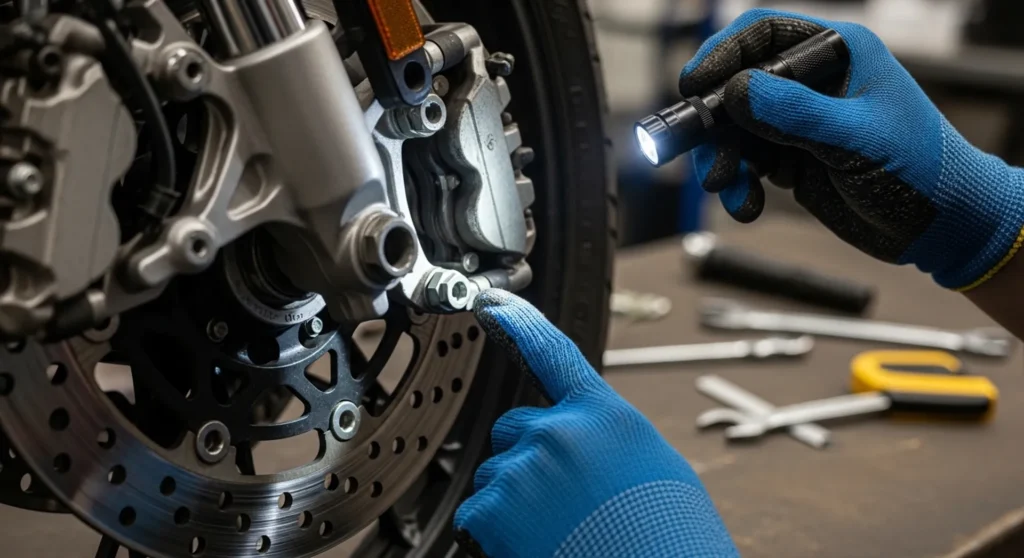
Most motorcycle accident claims are based on negligence. A driver turned left in front of the rider. A car changed lanes without checking blind spots. A distracted driver drifted into the motorcyclist’s lane. In a defect case, the legal question can be different. Instead of asking only whether another road user was careless, the case may ask whether the bike or one of its components was unreasonably dangerous.
That opens the door to a product liability claim. Depending on the facts, a case may involve:
- A design defect, where the part or system was unsafe from the start
- A manufacturing defect, where something went wrong during production
- A failure-to-warn claim, where the rider was not properly warned about a known danger
- Negligent repair or maintenance, where a dealer or shop failed to fix a known problem correctly
These cases are often more technical than normal accident claims. They may require preserving the motorcycle, inspecting the failed part, reviewing service records, and comparing the condition of the bike to recall notices, technical bulletins, and repair history.
Who May Be Liable in a Defect-Related Motorcycle Crash?
One of the biggest mistakes riders make is assuming only one party can be responsible. In reality, several different parties may share liability in a motorcycle defect case.
1. The Manufacturer
If the bike or one of its systems was defectively designed or manufactured, the motorcycle manufacturer may be a primary defendant.
2. The Parts Manufacturer
Sometimes the problem is tied to a specific component made by a third party, such as a brake hose, wheel part, fuel system component, electrical control unit, or suspension assembly.
3. The Dealership
If a dealer sold a bike with an unresolved recall, failed to complete recall work correctly, or made misleading statements about safety, it may become part of the claim.
4. A Repair Shop or Technician
If poor repairs, bad installation, or improper calibration contributed to the crash, the shop that worked on the motorcycle may share fault.
5. Another Driver
A defect does not automatically erase driver negligence. In some cases, a negligent driver and a defective motorcycle component both contribute to the same crash.
Why These Cases Are Harder Than Typical Motorcycle Accident Claims
Defect cases are harder because the evidence disappears fast. A totaled bike may be moved, salvaged, sold off, or repaired before anyone checks the failed component. A damaged part may be thrown away. A service record may be incomplete. If the rider does not act quickly, critical evidence can vanish before the legal case really begins.
That is why preserving the motorcycle matters so much. In an ordinary crash, photos and a police report may be enough to get the case moving. In a product-related case, the bike itself may be the most important piece of evidence.
This is also where your existing content can support the article. You can add internal links to AI Dashcams and Motorcycle Accident Evidence: How Smart Technology Is Changing California Claims in 2025 and Motorcycle Injury Documentation: Why Medical Records and Evidence Matter More in 2025.
What Riders Should Do After a Suspected Defect-Related Crash
If you think a mechanical problem, recall issue, or defective part contributed to your crash, take these steps seriously.
Get medical treatment immediately
Your health comes first. It also creates the medical record that will support your injury claim.
Do not repair the motorcycle right away
If possible, preserve the bike in its post-crash condition. Repairs can destroy the evidence needed to prove the defect.
Take detailed photos
Document the motorcycle, the roadway, the crash scene, warning lights, broken parts, fluid leaks, tire condition, and all visible damage.
Keep purchase and service records
Save receipts, service invoices, recall notices, dealership communications, and any repair recommendations.
Check for recalls
If the bike or a key component was recalled, that may become a major issue in the case.
Be careful with insurance statements
Insurers may try to reduce the case to simple rider error before the mechanical evidence is reviewed.
This section can also support internal links to Understanding Your Rights After a Motorcycle Accident: A Comprehensive Legal Guide and California Motorcycle Accident Statistics & Safety Trends in 2025.
What Compensation May Be Available?

If a motorcycle defect contributed to the crash, an injured rider may be able to pursue compensation for:
- Emergency medical treatment
- Hospital bills and surgery costs
- Physical therapy and future care
- Lost income and reduced earning capacity
- Pain and suffering
- Permanent disability or disfigurement
- Property damage
In some cases, defect claims may also involve broader corporate evidence, including prior complaints, repair attempts, technical service bulletins, and recall history. That can make the claim more valuable, but also more contested.
Why Fast Investigation Matters
Time is brutal in a defect case. The longer a rider waits, the more likely it is that the motorcycle will be altered, important records will disappear, or the defense will frame the crash as rider fault before anyone analyzes the machine properly.
That is why these cases need immediate investigation. A strong attorney will want to preserve the bike, review maintenance history, examine possible recall issues, inspect the failed components, and determine whether a product liability claim should be added to the injury case.
Final Thoughts
Motorcycle recall and defect cases are worth more attention in 2026 because riders are starting to realize that not every crash is just “one of those things.” Sometimes the real cause is hidden inside the bike itself. A failed brake component, unstable steering part, electrical defect, or unresolved recall can turn a normal ride into a catastrophic injury case.
If you were hurt in a motorcycle accident and something about the bike’s performance did not seem right, do not ignore that instinct. Preserve the motorcycle, gather the records, document the injuries, and investigate whether the crash involved more than rider error. In the right case, the legal responsibility may reach far beyond the roadway.
For official recall information, riders can check the NHTSA recall lookup tool.