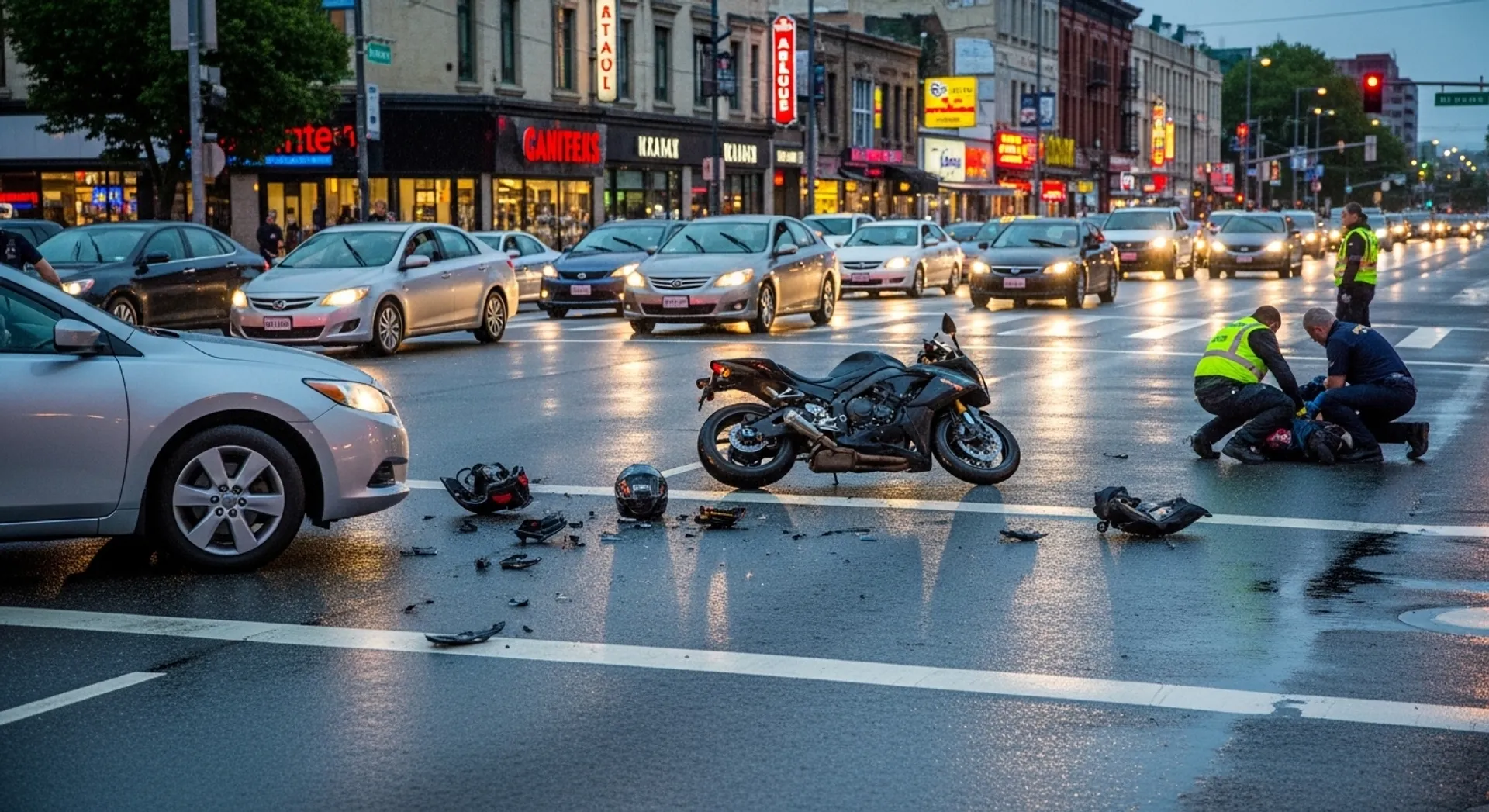

Few situations are more frustrating and frightening than being struck by a vehicle that immediately flees the scene. When you’re involved in a hit-and-run motorcycle accident, the shock and confusion can be overwhelming. The driver who caused your crash has disappeared, leaving you injured, your motorcycle damaged, and countless questions about what to do next.
Hit-and-run accidents happen more frequently than most people realize. In some cities, these incidents occur as often as every 18 minutes. For motorcyclists, the stakes are especially high because riders lack the protective shell of a car, making injuries typically more severe. Understanding the proper steps to take immediately after a hit-and-run can protect your health, preserve your legal rights, and maximize your chances of receiving compensation.
Immediate Actions at the Accident Scene
The moments following a hit-and-run motorcycle accident are critical. While your instincts may tell you to chase after the fleeing driver, your safety and well-being must come first. Taking the right actions now will significantly impact your ability to recover compensation later.
Ensure Your Safety First
If you’re able to move, get yourself and your motorcycle out of traffic to prevent additional collisions. Turn on your hazard lights if your bike is still functional, or use flares or warning triangles if you have them. Motorcyclists face significantly higher risks on the road, and secondary accidents at crash scenes can be deadly.
Check yourself for injuries. Adrenaline can mask pain and make you unaware of serious conditions like internal bleeding, fractures, or concussions. Even if you feel fine, symptoms may appear hours or days later. Do not attempt to walk off injuries or downplay their severity.
Call Emergency Services Immediately
Contact 911 as soon as possible, even if the other driver fled. Inform the dispatcher that you were involved in a hit-and-run motorcycle accident. This is important for two reasons: you’ll get medical attention, and law enforcement will respond to investigate and create an official report.
Stay at the scene until police arrive. Leaving before law enforcement completes their investigation could complicate your case or even result in you facing legal consequences. Federal law requires hit-and-run accidents to be reported within 24 hours, and many states have even stricter timeframes.
Gathering Critical Evidence
Evidence collection is essential in hit-and-run cases because you’ll need to prove what happened without the cooperation of the at-fault driver. The more information you can gather, the stronger your case will be when filing an insurance claim or pursuing legal action.
Document Everything You Can Remember
While details are fresh in your mind, write down or record everything you remember about the incident. This includes the time, location, weather conditions, traffic patterns, and most importantly, any details about the vehicle that struck you. Even small details matter, such as the make, model, color of the vehicle, partial license plate numbers, distinguishing features like dents or bumper stickers, and the general direction the vehicle was traveling when it fled.
If you caught a glimpse of the driver, note their appearance including gender, approximate age, hair color, clothing, and whether they were wearing glasses. These descriptions can help law enforcement locate the responsible party.
Take Photographs and Videos
Use your smartphone to capture comprehensive photographic evidence of the scene. If your injuries prevent you from doing this yourself, ask a bystander or witness to help. Important photos include damage to your motorcycle from multiple angles, your visible injuries, the entire accident scene showing the position of vehicles and debris, skid marks or tire tracks on the roadway, broken glass or vehicle parts left behind, road conditions and traffic signs, and weather conditions.
These visual records provide concrete evidence that supports your version of events and demonstrates the severity of the collision.
Identify and Interview Witnesses
Witnesses are invaluable in hit-and-run cases. Look for anyone who may have seen the accident occur or the vehicle fleeing the scene. This could include other drivers, pedestrians, business owners, or people in nearby buildings. Approach witnesses politely and ask for their contact information including full names, phone numbers, email addresses, and physical addresses.
If witnesses are willing, record brief statements from them using your phone’s voice or video recorder. Ask them what they saw, including details about the vehicle and driver. Get their account while memories are fresh, as recollections can fade or change over time.
Medical Attention Cannot Wait
Seeking immediate medical care is crucial both for your health and for your legal case. Never decline medical evaluation at the scene, even if you believe your injuries are minor.
Motorcycle accidents commonly result in hidden injuries that don’t present symptoms immediately. These can include traumatic brain injuries, internal bleeding, spinal cord damage, organ injuries, and soft tissue damage. Delayed symptoms from motorcycle crashes can become life-threatening if left untreated.
Accept ambulance transport if emergency responders recommend it. Going directly from the accident scene to the hospital establishes a clear connection between the collision and your injuries. If you decline transport, visit an emergency room or your doctor within 24 to 48 hours. Delays in seeking treatment give insurance companies ammunition to argue that your injuries weren’t serious or weren’t caused by the accident.
Follow All Medical Advice
Attend all follow-up appointments, complete prescribed treatments, and follow your doctor’s restrictions. Keep detailed records of every medical visit, including dates of appointments, names of healthcare providers, diagnoses and treatment plans, prescriptions and medications, therapy sessions, and medical bills and receipts.
This documentation proves the extent and severity of your injuries, which directly impacts the compensation you can recover.
Working With Law Enforcement
The police report is a foundational piece of evidence in your hit-and-run case. Law enforcement officers will investigate the scene, interview witnesses, and document all available information about the incident.
When speaking with officers, provide a clear and factual account of what happened. Be honest and detailed, but stick to what you know for certain. Avoid speculating about details you’re unsure of or making assumptions about what the other driver was thinking or doing.
Obtain the police report case number before leaving the scene. You’ll need this number to request copies of the full report once it’s completed. Request a copy of the report as soon as it becomes available. Review it carefully for accuracy and report any errors to the investigating officer immediately.
Law enforcement will work to identify and locate the hit-and-run driver. They may use traffic cameras, surveillance footage from nearby businesses, witness descriptions, and physical evidence left at the scene like vehicle parts or paint transfer. Stay in contact with investigators and provide any additional information you remember or evidence you discover.
Understanding Your Insurance Coverage Options
When the at-fault driver cannot be identified or located, your own insurance coverage becomes critical for recovering compensation. Understanding what protection your policy provides is essential for navigating the claims process.
Uninsured Motorist Coverage
Uninsured motorist coverage is specifically designed for situations like hit-and-run accidents. This coverage treats the fleeing driver as uninsured and provides compensation for your injuries and damages. Many states require this coverage, while others make it optional. Check your policy to determine what limits you have.
Uninsured motorist bodily injury coverage pays for medical expenses, lost wages, pain and suffering, and long-term care needs. Uninsured motorist property damage may cover repairs to your motorcycle, though this varies by state and some states require physical contact between vehicles for this coverage to apply.
To trigger uninsured motorist coverage in a hit-and-run case, you typically must meet two requirements: the driver who caused the accident cannot be identified or located, and there must be actual physical contact between the vehicles. This contact requirement is important. If a vehicle swerves into your lane causing you to crash without actually touching your bike, some insurance companies may deny coverage.
Collision Coverage
Collision coverage pays for damage to your motorcycle regardless of who was at fault. If you have this coverage, it will repair or replace your bike even if the hit-and-run driver is never found. You’ll need to pay your deductible, but this coverage ensures you’re not left without transportation.
Medical Payments and Personal Injury Protection
Medical payments coverage or personal injury protection provides immediate payment for medical expenses regardless of fault. These coverages can help with hospital bills, emergency care, doctor visits, and sometimes lost wages and rehabilitation costs. They typically have lower coverage limits but can provide quick access to funds while other claims are being processed.
Filing Your Insurance Claim
Prompt notification to your insurance company is essential. Contact your insurer as soon as possible after the accident, ideally within 24 hours. Many policies have strict reporting deadlines, and delays can complicate or even jeopardize your claim.
When reporting the hit-and-run, provide the date, time, and location of the accident, the police report case number, a brief description of what happened, and information about your injuries and motorcycle damage. Be factual and concise. Avoid admitting fault or speculating about things you don’t know for certain.
What to Expect During the Claims Process
Your insurance company will assign a claims adjuster to investigate your case. The adjuster will review the police report, interview you and any witnesses, inspect your motorcycle damage, and evaluate your medical records and bills. Be prepared for the adjuster to ask detailed questions. While you should cooperate with the investigation, be careful about what you say. Insurance companies sometimes look for reasons to reduce claim values, even when dealing with their own policyholders.
Consider having an attorney present for recorded statements or at least consulting with a lawyer before providing one. What you say can be used to minimize your claim, and adjusters are trained to ask questions in ways that may elicit harmful responses.
Common Challenges in Hit-and-Run Cases
Hit-and-run motorcycle accident claims present unique obstacles that require strategic approaches to overcome.
Proving the Accident Occurred
Without an identified at-fault driver, insurance companies sometimes question whether a hit-and-run actually happened or suggest you caused your own crash. This is why evidence is so critical. Police reports, witness statements, photographs of the scene, damage patterns on your motorcycle, and injuries consistent with being struck by another vehicle all help prove your case.
The Contact Requirement
Many uninsured motorist policies require physical contact between vehicles for coverage to apply. This rule can be frustrating when a vehicle causes you to crash without actually touching your motorcycle. Some states have exceptions for hit-and-run situations or when the other vehicle is identified. Review your policy carefully and discuss this requirement with your attorney if it applies to your case.
Low Coverage Limits
Even with uninsured motorist coverage, policy limits may not fully compensate you for severe injuries. If your medical bills and other damages exceed your coverage limits, you may have limited options for additional recovery unless the hit-and-run driver is eventually found.
Why Legal Representation Matters
Hit-and-run cases are complex, and having an experienced motorcycle accident attorney can significantly improve your outcome. Lawyers understand the nuances of insurance policies and can identify coverage you might not realize you have.
An attorney can investigate the accident thoroughly, working with law enforcement and private investigators to identify the hit-and-run driver. They can obtain surveillance footage from businesses before it’s deleted, interview witnesses professionally, analyze physical evidence, and pursue all possible sources of compensation.
Legal representation is especially important when negotiating with insurance companies. Even your own insurer may try to minimize your claim. Attorneys know the tactics adjusters use and how to counter them effectively. They can calculate the true value of your claim including future medical needs and long-term impacts you might not have considered.
Most motorcycle accident attorneys work on contingency fees, meaning you pay nothing upfront and they only collect payment if they secure compensation for you. This arrangement makes legal representation accessible when you’re already facing financial strain from medical bills and lost income.
Steps to Protect Your Rights
Throughout the claims process, be proactive about protecting your legal rights and strengthening your case.
Avoid Social Media
Do not post about your accident or injuries on social media platforms. Insurance companies routinely monitor claimants’ social media accounts looking for posts they can use to deny or reduce claims. A photo of you engaging in any physical activity could be misinterpreted as evidence that your injuries aren’t serious.
Keep Detailed Records
Maintain a comprehensive file of all accident-related documents including police reports, medical records and bills, insurance correspondence, photographs and videos, witness contact information and statements, and receipts for all accident-related expenses.
Keep a personal journal documenting your injuries, pain levels, how the accident has impacted your daily life, medical appointments and treatments, and time missed from work. This record provides valuable evidence of your damages, especially non-economic losses like pain and suffering.
Don’t Accept Quick Settlement Offers
Insurance companies often make early settlement offers hoping you’ll accept before understanding the full extent of your injuries. These initial offers are typically much lower than what your claim is worth. Do not accept any settlement or sign any release without consulting an attorney first. Once you accept a settlement, you cannot go back and request more money if your injuries turn out to be more serious than initially thought.
Time Limits for Taking Action
Every state has statutes of limitations that set deadlines for filing lawsuits. If the hit-and-run driver is eventually identified, you’ll need to file any legal action within this timeframe or lose your right to sue. Statutes of limitations vary by state but typically range from one to six years from the accident date.
Don’t wait until the deadline approaches to consult with an attorney. Evidence can disappear, witnesses can become unavailable, and memories fade over time. The sooner you involve legal representation, the stronger your case will be.
Moving Forward After a Hit-and-Run
Being the victim of a hit-and-run motorcycle accident is traumatic and infuriating. The person who caused your injuries and damages fled the scene, leaving you to deal with the consequences alone. While the situation may seem hopeless, you do have options for recovery.
By taking the right steps immediately after the accident, gathering thorough evidence, understanding your insurance coverage, and working with experienced legal representation, you can navigate this challenging situation and secure the compensation you need. Focus on your physical and emotional recovery while letting professionals handle the complex legal and insurance matters.
Remember that even if the hit-and-run driver is never identified, your own insurance coverage may provide substantial compensation for your injuries and damages. With proper documentation, persistence, and the right legal support, you can move forward from this traumatic experience and rebuild your life.