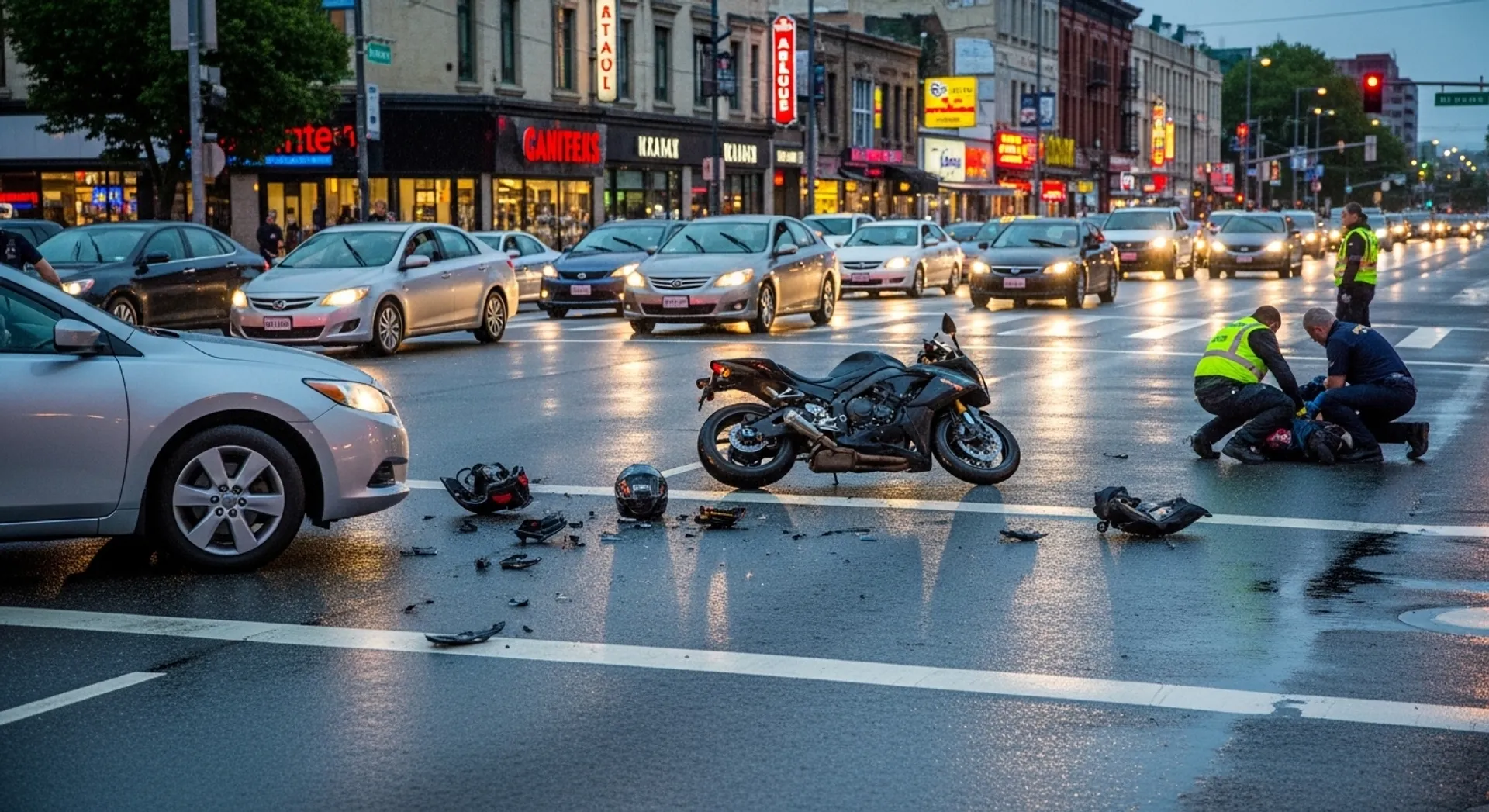
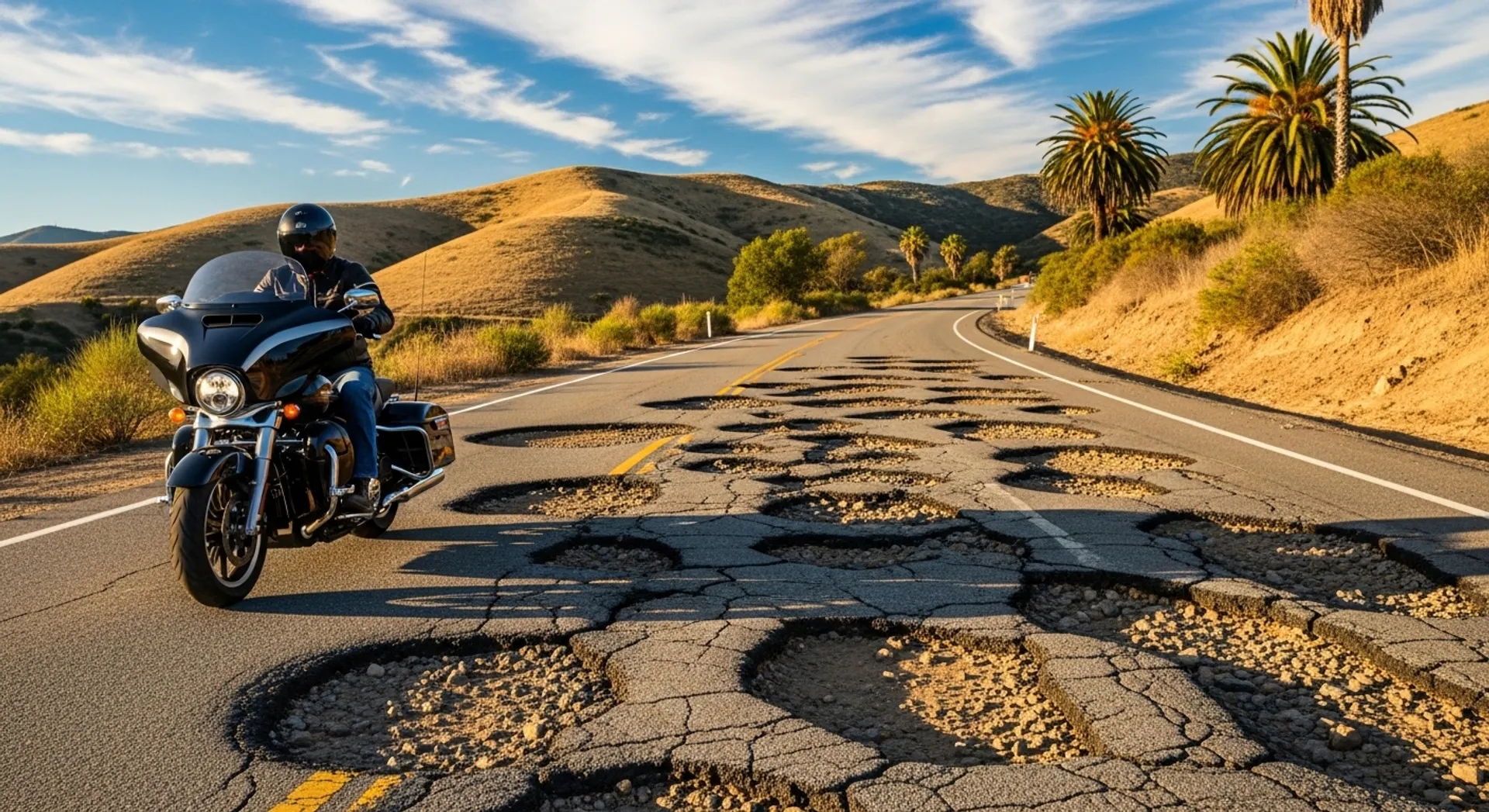
Not every motorcycle crash is caused by a careless driver. Sometimes the real danger is already sitting in the roadway before the rider ever arrives. A deep pothole, loose gravel, broken pavement, standing water, uneven lanes, missing warnings, or road debris can turn an ordinary ride into a violent crash in seconds. That is why motorcycle road hazard accidents in California deserve more attention in 2026.
For riders, road hazards are different from ordinary driving annoyances. A pothole that might damage a car tire can throw a motorcyclist off balance. Loose debris that a larger vehicle rolls over without much trouble can cause a rider to slide, wobble, or lose control. Uneven pavement, poor construction transitions, and unsafe shoulder edges are also much more dangerous on two wheels than four. In the wrong situation, the road itself becomes the main cause of the crash.
This topic fits naturally with what Motorcycle Accident Law Firm already covers. If you want broader context, start with California Motorcycle Accident Statistics & Safety Trends in 2025, then review Motorcycle Injury Documentation: Why Medical Records and Evidence Matter More in 2025 and AI Dashcams and Motorcycle Accident Evidence. Those posts support this one because road hazard claims often depend on fast evidence collection and strong injury proof.
Why road hazard crashes are especially dangerous for motorcyclists
Motorcycles do not have the same margin for error as passenger vehicles. Riders rely on balance, traction, visibility, and a clean surface more than almost anyone else on the road. That means defects in pavement or unexpected debris can create immediate danger even when the rider is not speeding or making a mistake.
Some of the most common roadway hazards in motorcycle cases include:
- Potholes and collapsed pavement
- Loose gravel, sand, or construction residue
- Road debris such as metal, wood, tire pieces, or cargo spill
- Uneven pavement or dangerous lane drop-offs
- Poorly marked work zones
- Standing water, oil, or slick surface conditions
- Missing or obscured warning signs
These hazards do not always look dramatic in photos. Still, for a rider, they can be enough to trigger a slide, high-side, low-side, or forced evasive move that ends in a severe injury. That is one reason the site’s existing content on left-turn motorcycle accidents and motorcycle hit-and-run accidents in California pairs well with this topic. The crash mechanism changes, but the injury stakes stay high.
When a road hazard becomes a legal claim
Not every rough patch in the road creates liability. A legal claim usually depends on more than the existence of a bad surface. The bigger questions are:
- Was the road condition dangerous enough to create a substantial risk?
- Who controlled or maintained that location?
- Did that party know, or should they have known, about the problem?
- Did they have enough time to fix it or warn about it?
- Did the hazard actually cause the crash and the injuries?
In California, this kind of case may involve a “dangerous condition of public property” theory. That can apply when a city, county, or state-controlled roadway was in a dangerous condition and that condition caused the injury. But these are not simple cases. The rider still has to prove what the hazard was, where it was, who controlled it, and why it mattered.
Who may be responsible for a motorcycle road hazard crash?
1. A city, county, or the state
If the dangerous condition existed on a public road, the responsible public entity may be part of the case. That could be a city street, a county-maintained road, or a state highway. In some situations, Caltrans may be the relevant agency if the crash happened on the state highway system.
2. A construction contractor
Construction zones create their own risks. Uneven pavement transitions, loose gravel, missing warning signs, temporary striping problems, or unprotected work areas can all become serious issues for riders. If a contractor created or failed to control the hazard, the contractor may become part of the claim.
3. A private property owner or business
Some road hazard crashes happen in parking lots, private access roads, driveways, apartment complexes, or business entrances. In those cases, private ownership and maintenance responsibility may matter more than government control.
4. Another driver
Sometimes the road is not the only problem. A driver may drop cargo, kick debris into the rider’s path, make an unsafe move to avoid a hazard, or force the rider into a dangerous roadway edge. In those situations, both roadway conditions and driver negligence may matter.
Why timing matters so much in these cases
Road hazard cases can weaken fast. A pothole may be patched the next day. Debris may be cleared within an hour. Construction layouts change. Rain washes away gravel. Tire marks fade. By the time an injured rider is home from the hospital, the most important physical evidence may already be gone.
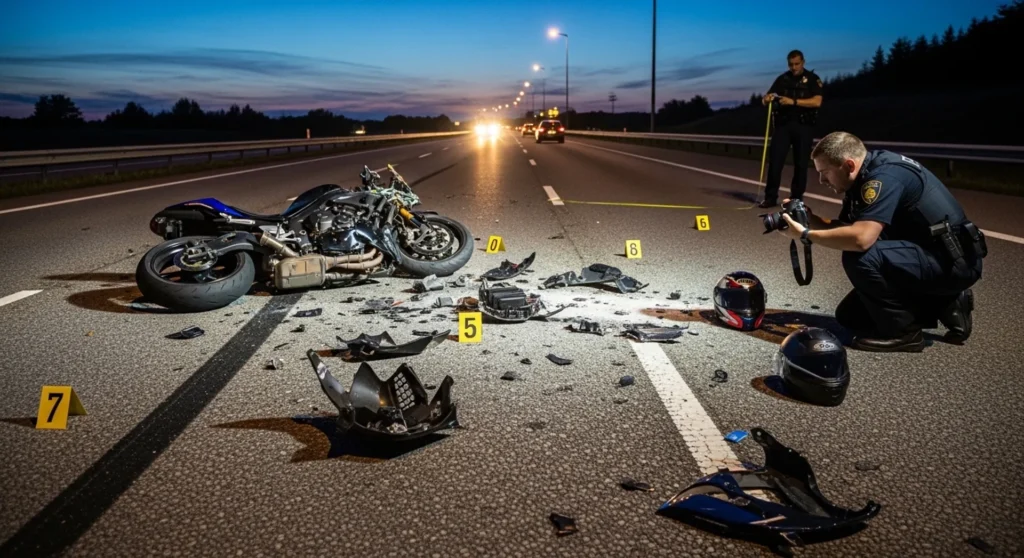
That is why these cases depend heavily on immediate documentation. Photos of the roadway, the exact location, lane position, nearby signs, skid marks, traffic flow, and the motorcycle’s damage can all become critical. Video matters too. If you use a helmet camera or a dashcam, preserve the raw file immediately. That advice lines up with the site’s existing post on AI dashcams and motorcycle accident evidence.
What riders should do after a suspected road hazard crash
- Get medical care first. Your safety comes before everything else.
- Photograph the roadway immediately if possible. Capture the pothole, debris, broken pavement, lack of warning signs, lane markings, and surrounding area.
- Record the exact location. Include the road name, nearest intersection, lane, direction of travel, and any landmarks.
- Look for cameras and witnesses. Nearby homes, businesses, traffic cameras, and witnesses may help prove the condition existed before the crash.
- Preserve the motorcycle and gear. Damage patterns may help show how the crash happened.
- Report the hazard. If the road is on the state highway system, Caltrans has a customer service request system and a separate claims process.
- Talk to a lawyer early. Claims involving public entities often move much faster than ordinary injury claims.
Why government claims are different
This is where many riders get blindsided. A normal personal injury case usually gives more time to act. Claims involving a government agency do not work that way. In California, before you sue a government agency, you generally must first submit a claim to that agency. If the claim is denied, the lawsuit deadline can then move quickly.
That makes road hazard cases more technical than many riders expect. It is not enough to know you were hurt by a dangerous road. You also need to identify the correct public entity, preserve evidence before the condition changes, and move before the shorter claim deadlines expire. Missing that first administrative step can seriously damage the case.
For riders dealing with a state highway hazard, it can help to review the official Caltrans damage claim process and California Courts’ page on claims against a government agency.
What evidence helps prove these cases?

- Scene photos and video: Show the condition before it changes.
- Helmet cam or dashcam footage: Helps prove speed, lane position, visibility, and sudden impact.
- Witness statements: Useful if someone saw the defect earlier or saw other vehicles hit it.
- Crash reports: These can help document location and initial observations.
- Maintenance or complaint history: Prior reports may support notice arguments.
- Medical records: These prove what the crash did to your body and how recovery progressed.
This is also where the site’s article on injury documentation becomes directly useful. A strong road hazard case needs both liability evidence and medical proof.
What compensation may be available?
If a dangerous roadway condition caused the crash, an injured rider may be able to pursue compensation for emergency care, hospital bills, surgery, physical therapy, lost wages, reduced earning capacity, pain and suffering, property damage, and future medical needs. In catastrophic cases, the claim may also involve long-term disability, permanent impairment, or wrongful death damages.
Of course, compensation depends on the facts. The harder part is usually proving responsibility before the evidence disappears and before the shorter deadlines run out.
Final thoughts
Motorcycle road hazard accidents in California are easy to underestimate because people often focus only on driver negligence. But sometimes the road itself is the problem. A pothole, loose debris field, bad construction transition, or unsafe pavement defect can cause a devastating motorcycle crash even when the rider was otherwise careful.
If you suspect a dangerous roadway condition caused your crash, treat the case like it is time-sensitive, because it is. Document the scene, preserve the bike, get medical care, identify who controlled the road, and move quickly before repairs, cleanup, or missed deadlines erase the strongest part of the claim.